

Tesla Model 3 heat pump compressor failure: why one failed part can become a £3,000 to £5,000 repair
A Model 3 arrived with ‘Air Conditioning Unavailable’ and no cabin cooling. A failed heat pump compressor had contaminated the whole refrigerant system. Here is the full repair, and what owners can do to give the heat pump the best chance of a long life.
personBy Gabor, MegaEV calendar_today 4 min read
This Model 3 arrived with an ‘Air Conditioning Unavailable’ alert and no cabin cooling. What looks like a simple A/C fault can quickly turn into one of the most expensive thermal system repairs on a heat pump-equipped Tesla.
Diagnose first, even when you suspect the answer
We suspected a failed electric compressor, but we never replace expensive parts based on assumptions. After a full thermal system diagnosis, we confirmed that the compressor had suffered an internal mechanical failure.
Unfortunately, this is becoming an increasingly common issue on heat pump-equipped Model 3s.
Why one failed compressor costs so much
When the compressor starts to break up internally, it sends fine metal particles all through the refrigerant circuit. Those particles do not stay inside the compressor. They contaminate the whole refrigerant system, including the Supermanifold, the central valve assembly of the heat pump, which then has to be replaced as well.
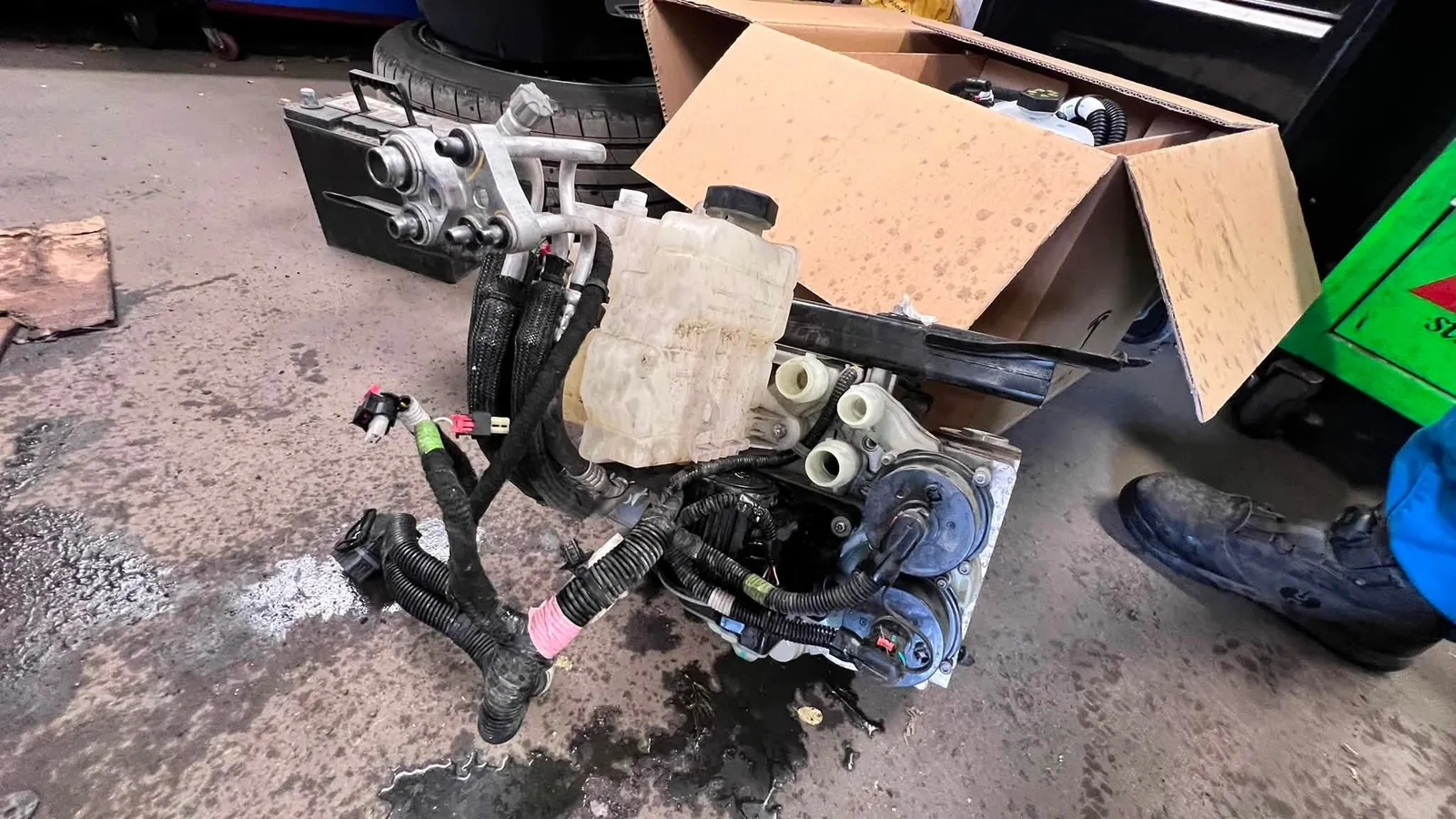
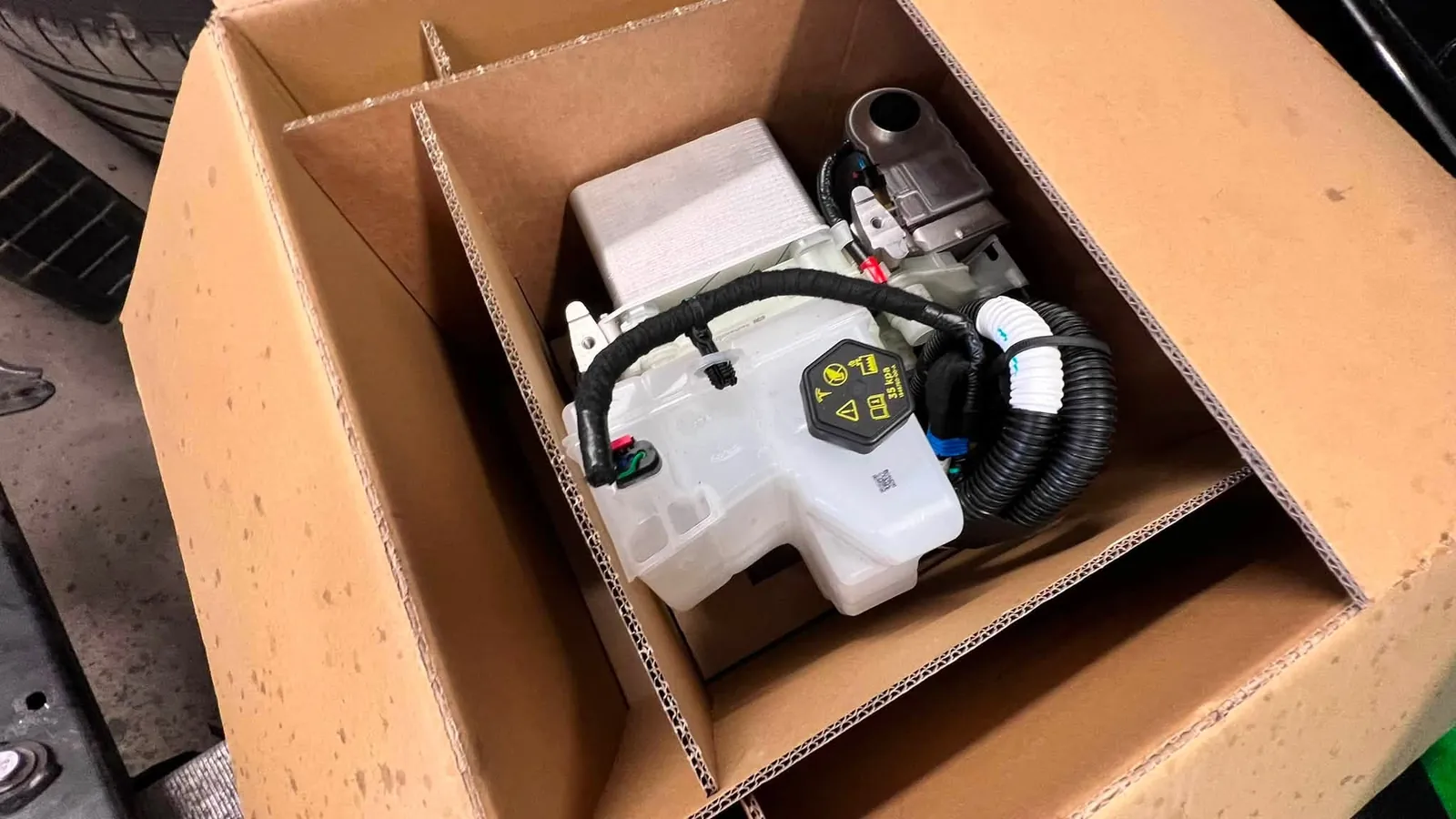
Fortunately, the evaporator inside the dashboard could be professionally flushed instead of replaced. This is one of the most critical parts of the whole repair. If any contamination is left in the system, or the correct amount of compressor oil is not restored afterwards, the new compressor can fail again very quickly.
A radiator half blocked with leaves
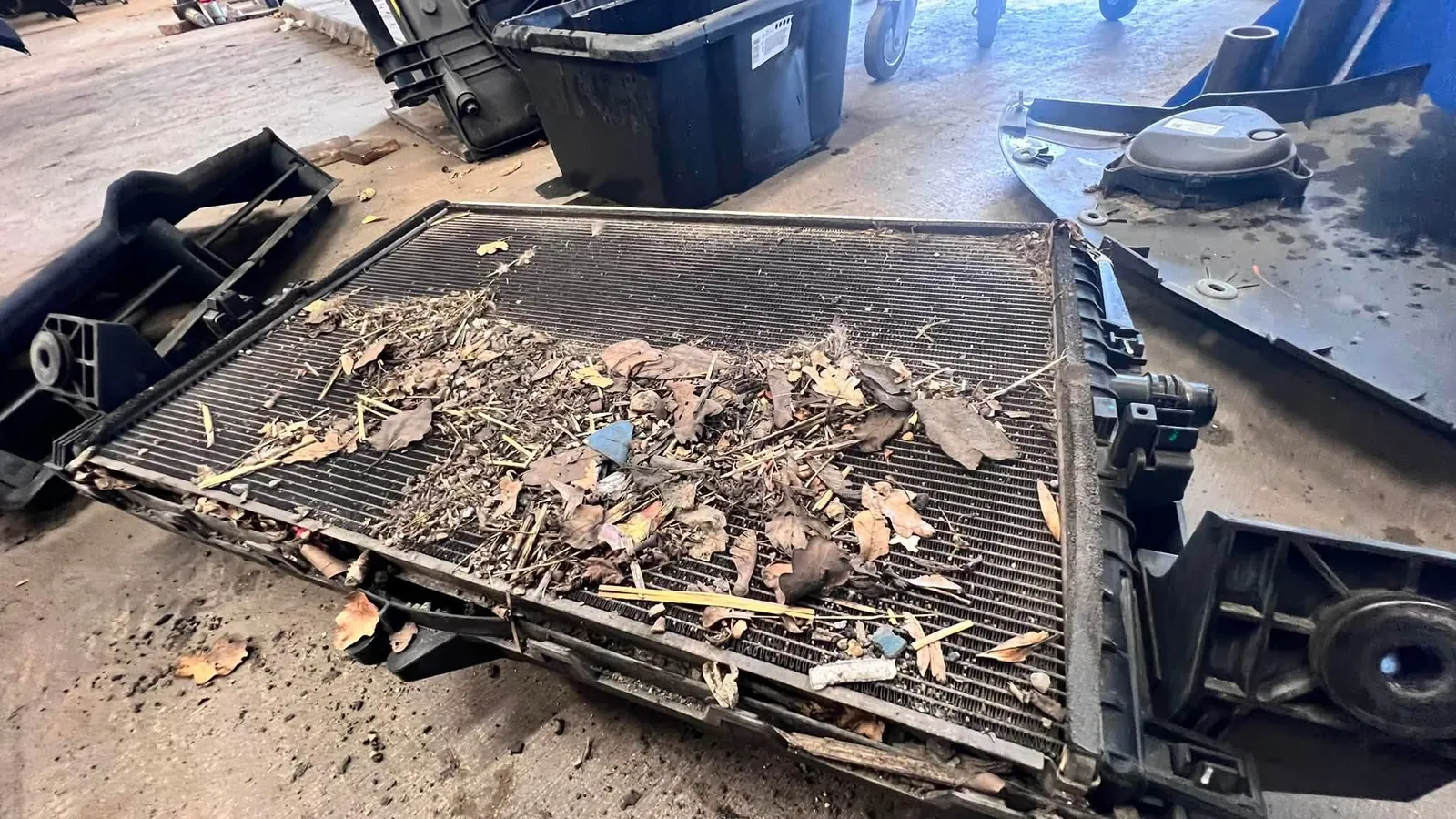
When we removed the radiator pack, we found nearly half of its cooling surface blocked with leaves and road debris.
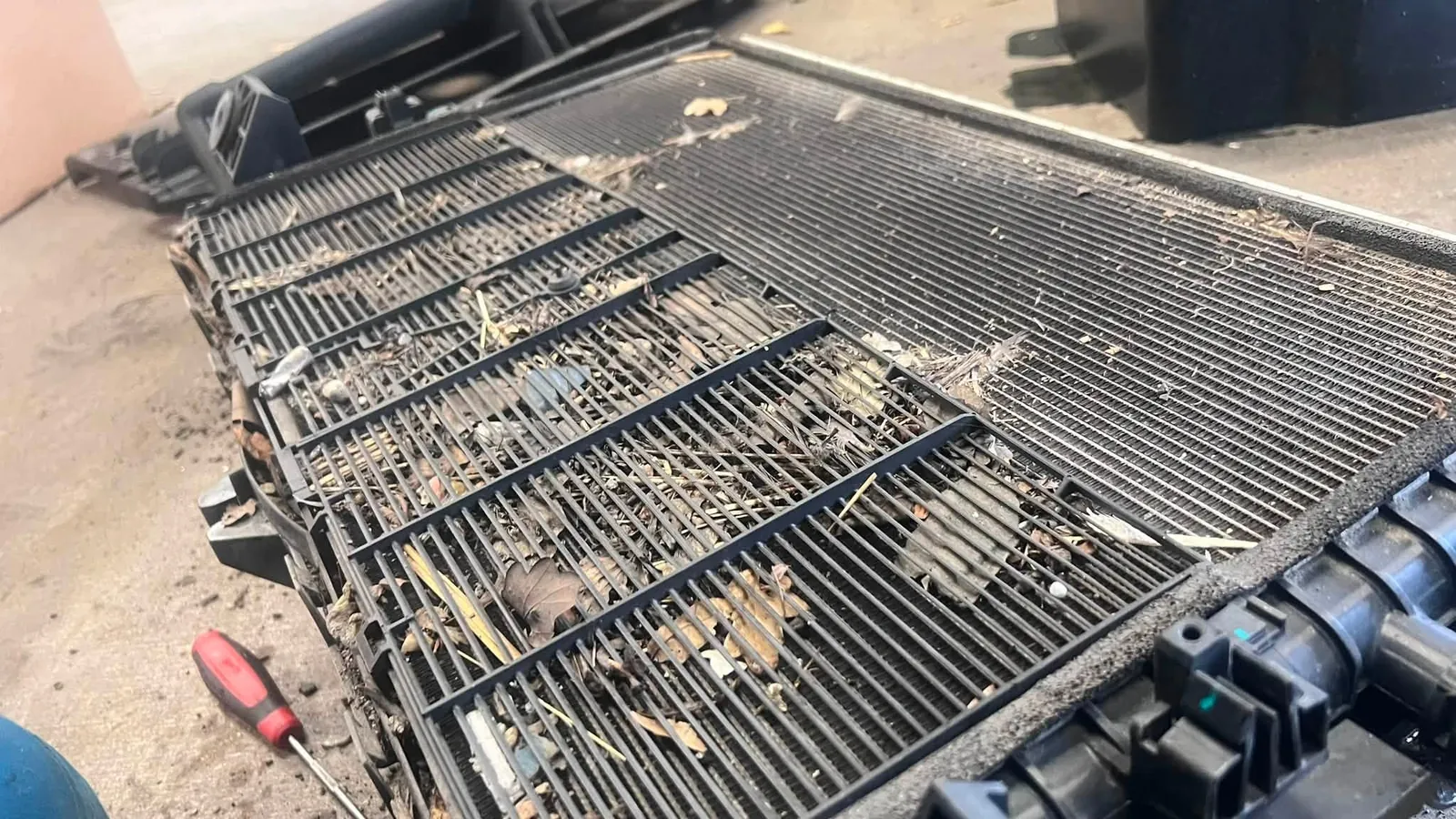
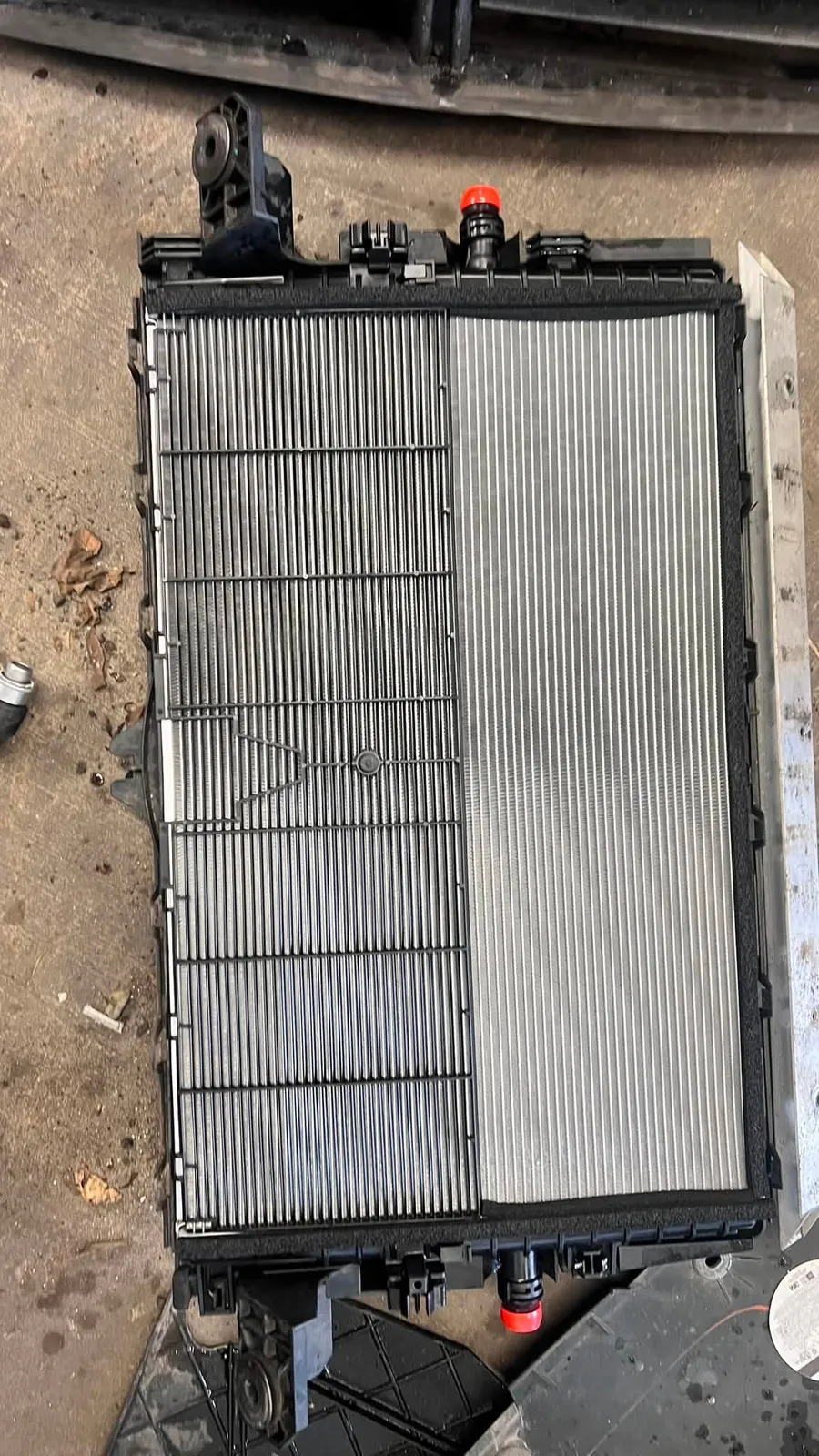
This was not necessarily the root cause of the failure. But restricted airflow raises operating temperatures and puts extra load on the compressor. We also found evidence that the Supermanifold had not been regulating the system as efficiently as it should, which forced the compressor to work even harder.
We discussed the options with the owner, and decided to replace the radiator as well rather than try to clean it.
The completed repair
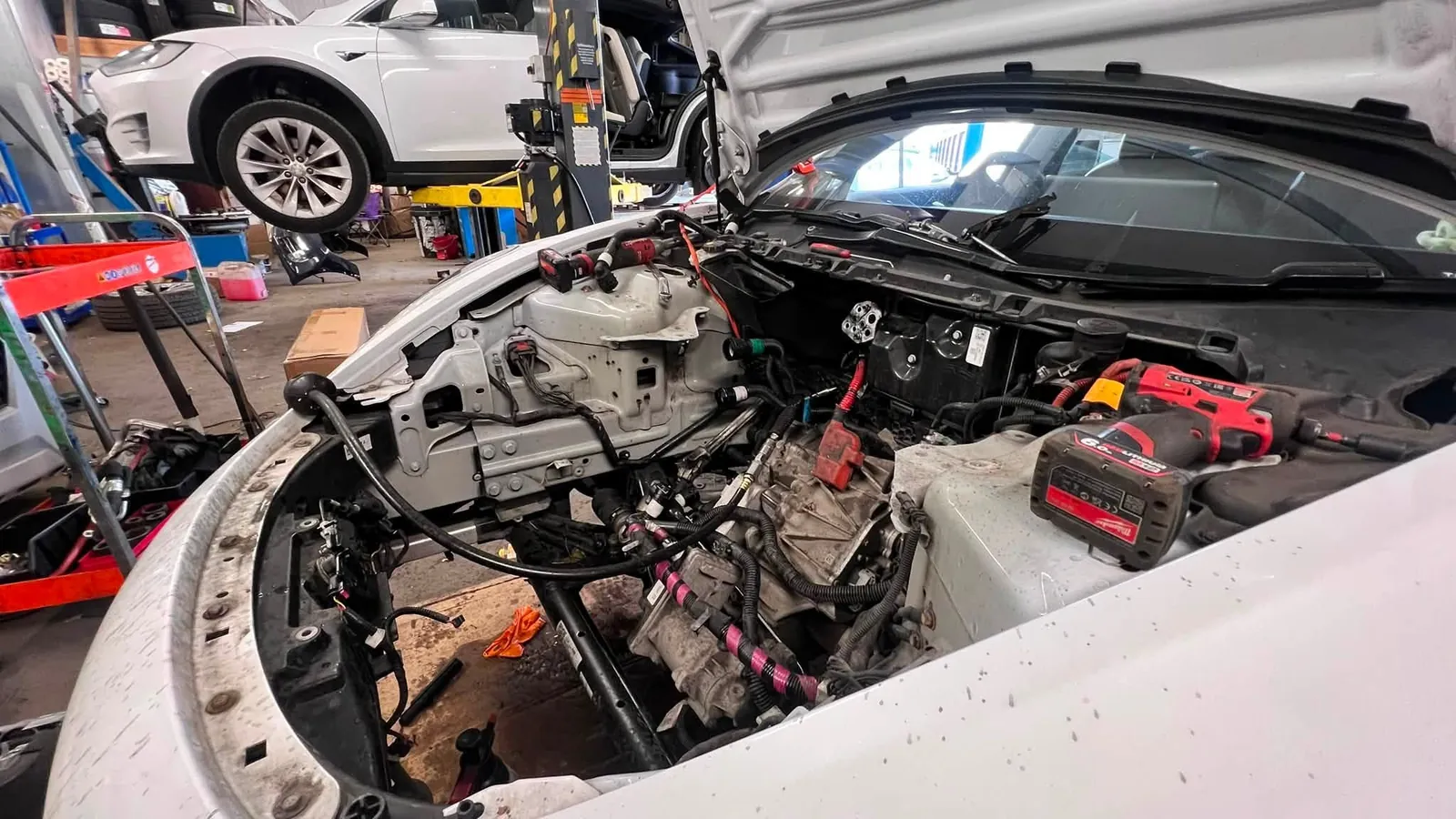
- new electric compressor
- correct compressor type programmed using Tesla Toolbox
- new Supermanifold assembly
- new radiator
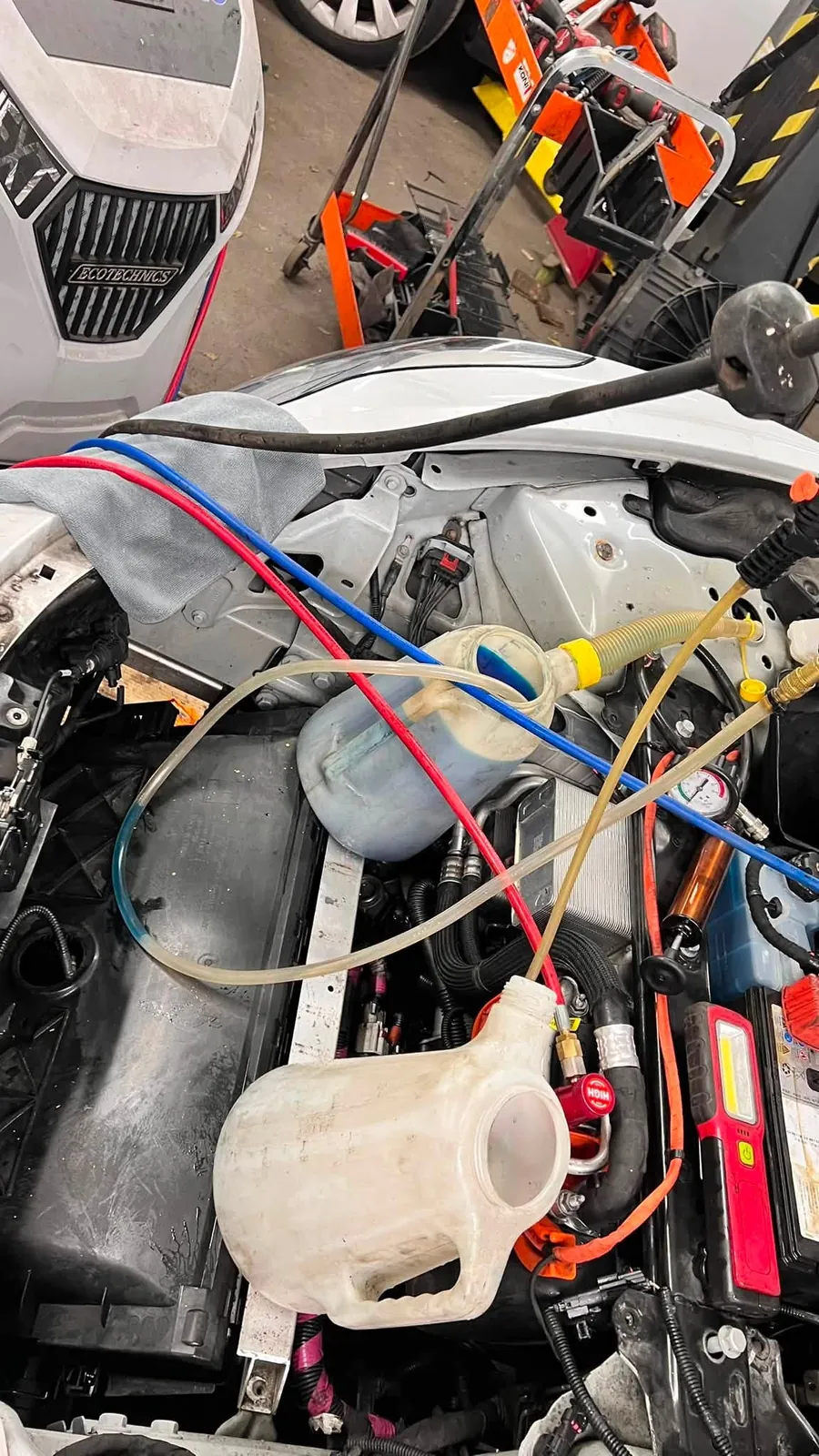
- complete refrigerant circuit flush
- evaporator flush
- radiator pack removed and thoroughly cleaned
- system vacuum tested and recharged with the correct quantity of refrigerant and oil
- thermal performance verified using Tesla Toolbox
Can heat pump failure be prevented?
There is no guaranteed way to prevent a heat pump failure. But a few simple maintenance items can significantly improve the chances of a long service life:
- Do not ignore thermal or HVAC alerts. Any fault affecting the thermal management system can increase the compressor's workload if it is left unresolved.
- Clean the radiator pack regularly, ideally every year. Unrestricted airflow reduces thermal stress on the system.
- Replace the Supermanifold filter roughly every 18 to 24 months, and inspect it for signs of metal contamination.
- Consider an A/C service every 2 to 3 years. The correct refrigerant quantity matters, because low refrigerant forces the compressor to work much harder to reach the cabin temperature you ask for.
Why the heat pump works so hard
Unlike a conventional A/C system, the thermal management system on a heat pump-equipped Model 3 works almost continuously, all year round. It cools and heats the cabin, cools the Autopilot computer, conditions the battery and manages the drivetrain temperatures.
That is why it deserves regular attention. For more on why thermal management matters, see our Model X thermal system repair, and our Model 3 PTC heater replacement for another Model 3 climate repair.
If your Tesla is showing ‘Air Conditioning Unavailable’ or any other thermal alert, send us a message before it gets worse. You can also ask us about the maintenance items above. Our air conditioning and thermal management service explains more.
Related service