

Tesla Model S 85 BMS voltage fault: repairing the battery instead of replacing it
A Model S 85 came in with a BMS over- and under-voltage fault. Here is how we traced it to one module, why the pack had to come out, and how we repaired it without a new battery.
personBy Gabor, MegaEV calendar_today 3 min read
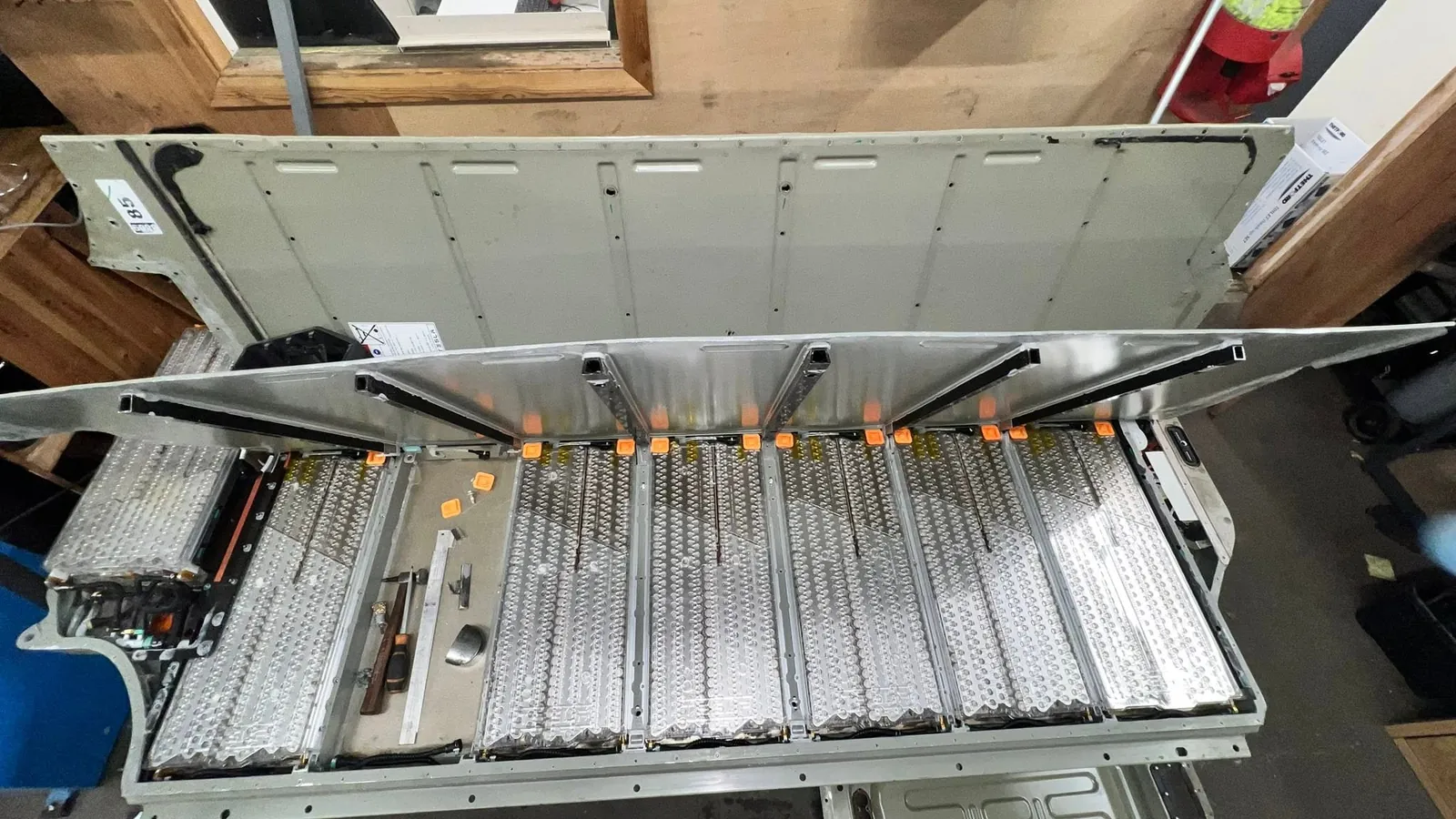
Most faults on a Tesla can be fixed without ever removing the high-voltage battery pack. Sometimes, though, the pack has to come out. When it does, a safe and lasting repair depends on three things: a proper diagnostic workflow, the right equipment, and experience with these batteries.
This is one of those jobs, from our workshop.
The fault: BMS over- and under-voltage
A Tesla Model S 85 came to us with a battery management system (BMS) fault, reporting both over-voltage and under-voltage. The BMS watches every cell group in the pack, so a warning like this tells you something is wrong, but not yet where or why.
So before touching anything, we ran full diagnostics.
What the diagnostics showed
The module readings quickly confirmed what we suspected. Module 6 had two faulty cell groups:
- one was reporting only around 1.64 V, far below the voltage of the healthy groups around it
- the other was not reporting at all
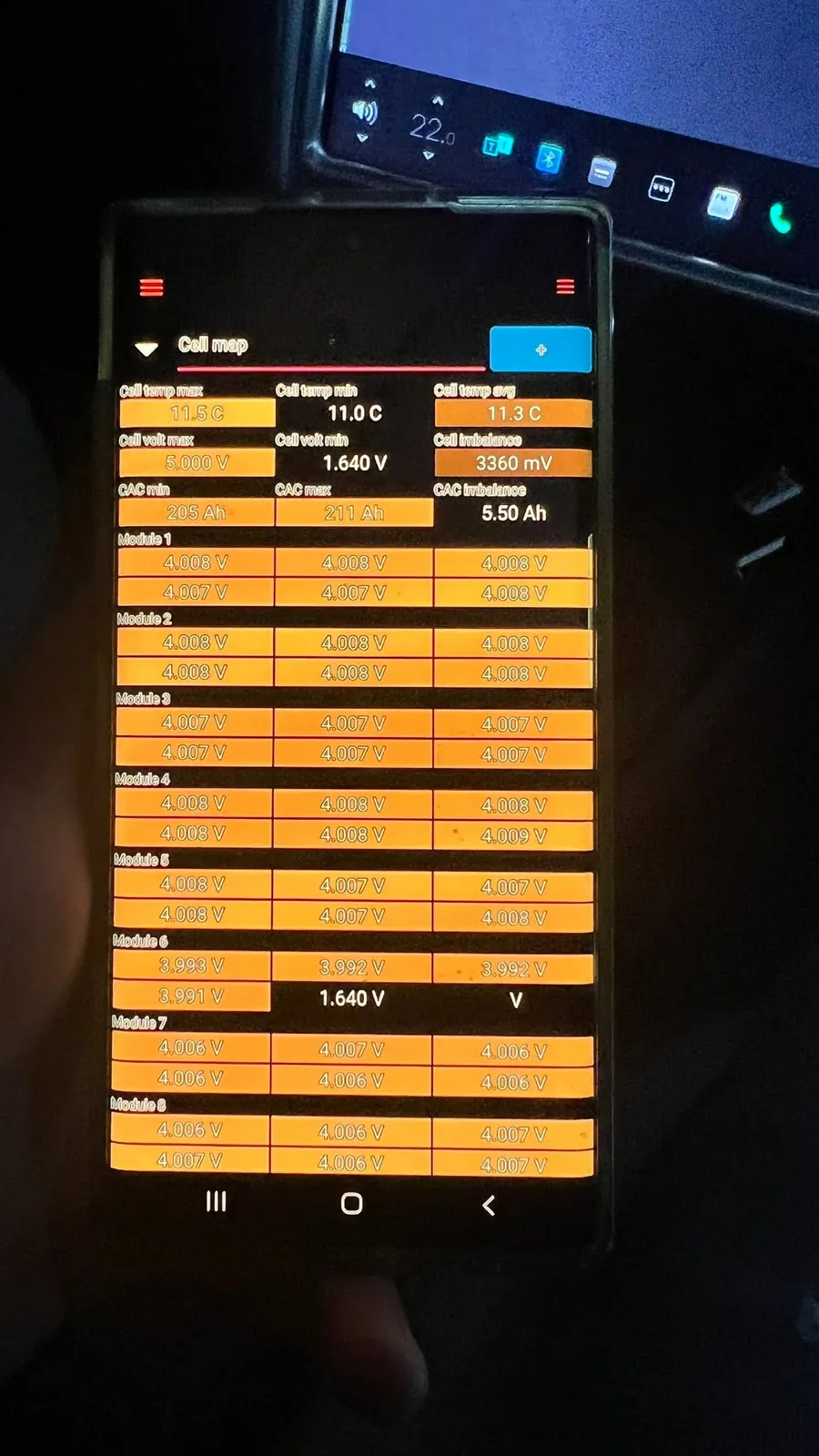
A fault inside a module cannot be fixed from the outside. At this point, removing the battery and opening it up is the only way to repair it properly.
Inside the pack
With the pack out and opened, we worked through it step by step:
- a visual inspection of every module and its battery monitoring board (BMB)
- checks on the umbrella valves, which let the pack breathe while keeping water out
- an inspection for condensation
- an assessment of each module, one by one
- a repair of the faulty module
- a fix for the root cause, so the same fault does not come back
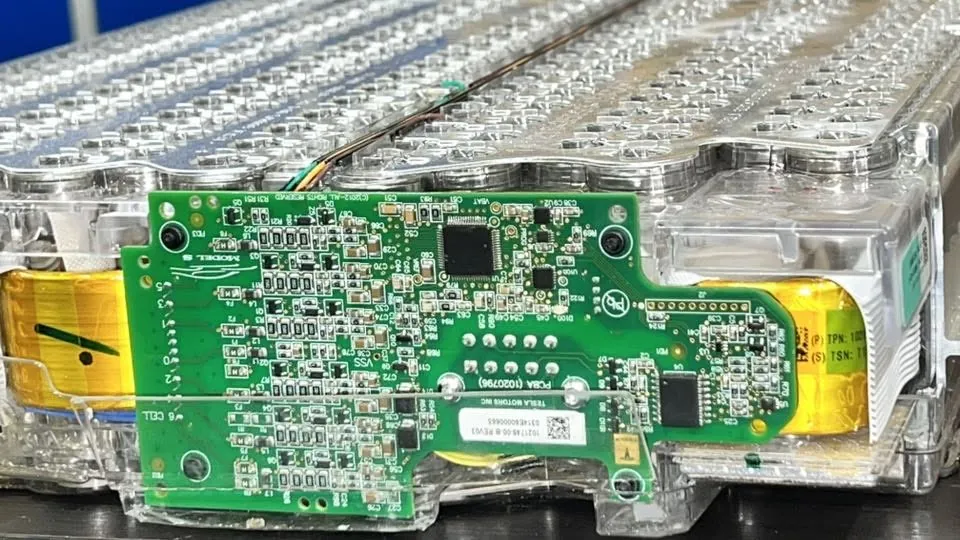
A battery fault does not have to mean a new battery
Many owners believe that a high-voltage battery fault automatically means the whole pack has to be replaced. Often it does not. With correct testing, diagnostics and a careful teardown, faults like this one can be repaired properly, at a fraction of the cost of a new battery.
What caused the fault in this car, and exactly how we fixed it, will be the subject of a follow-up entry in this diary.
Need help with your Tesla?
For the last few years, we have carried out this kind of work quietly for select clients. Now that MegaEV has officially launched, the same level of technical support is open to every Tesla owner.
If your Tesla is showing a high-voltage battery warning, a thermal management fault or anything else that does not feel right, send us a message and tell us what is happening. We will take it from there.
Related service