

Tesla Model S isolation fault: tracing an intermittent problem to the battery heater
A Model S showed "Vehicle may not restart" at a Supercharger, with isolation and fast-charge contactor alerts. The heater passed its thermal test, but the journey logs and an insulation test found the real fault, and the contactors did not need replacing.
personBy Gabor, MegaEV calendar_today 3 min read
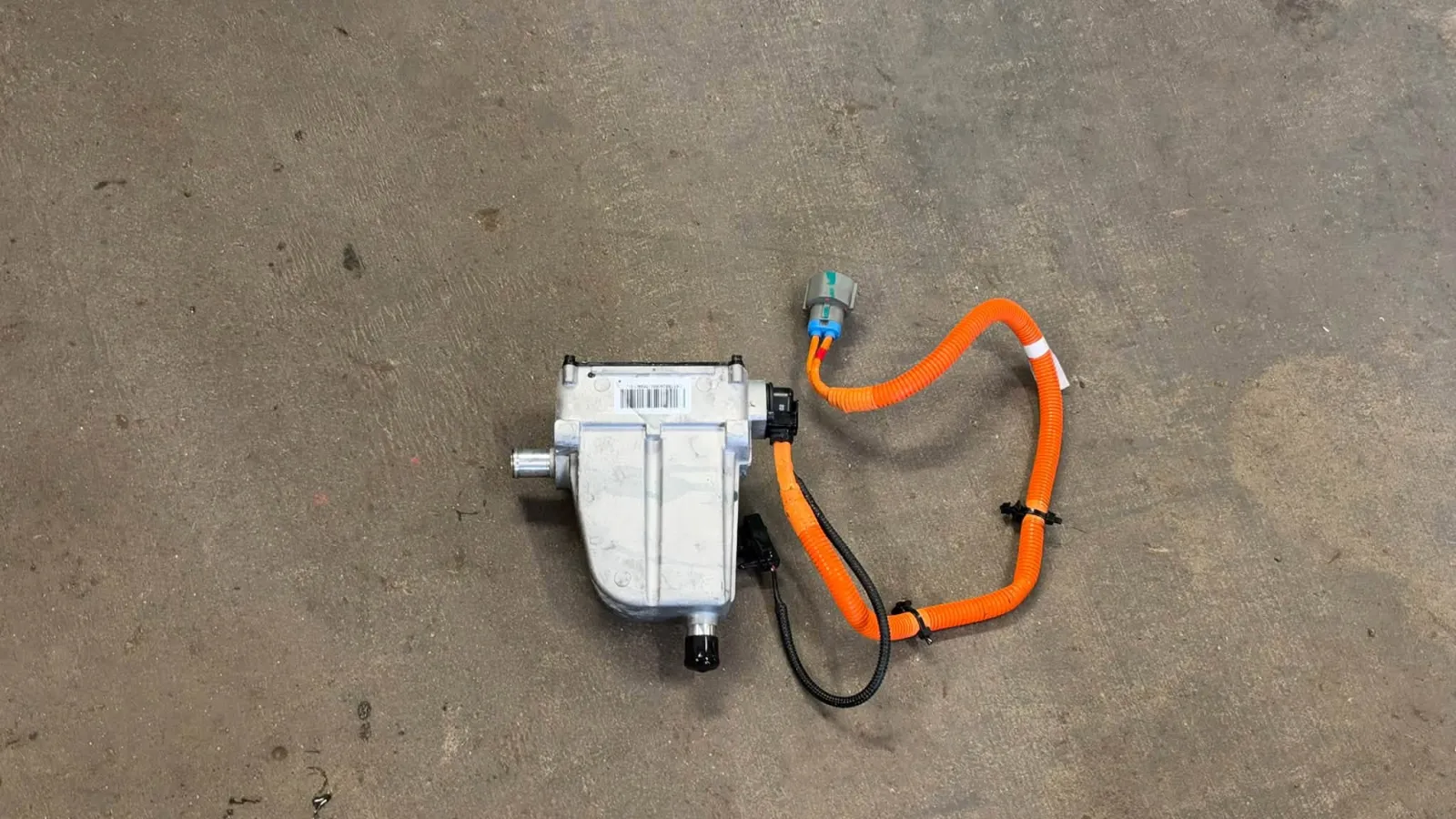
Winter is coming, and there is already a small queue of cars parked outside the workshop for a new battery heater. This Model S joined them in the end, but it took some detective work before we could be sure a heater was what it needed.
"Vehicle may not restart" at a Supercharger
The owner had just pulled in to a Supercharger when the screen showed "Vehicle may not restart", one of the messages no Tesla driver wants to see. In the event, the car charged as usual and completed the trip with no further trouble.
Two kinds of alert were stored: isolation degradation, and faults on the fast-charge contactors. Taken at face value, that list could easily lead to new contactors.
Following the whole journey in the logs
First we went through the day with the owner, step by step. Then we pulled the car's logs for the complete trip, from the moment it set off, through the charging stop, to the end of the journey.
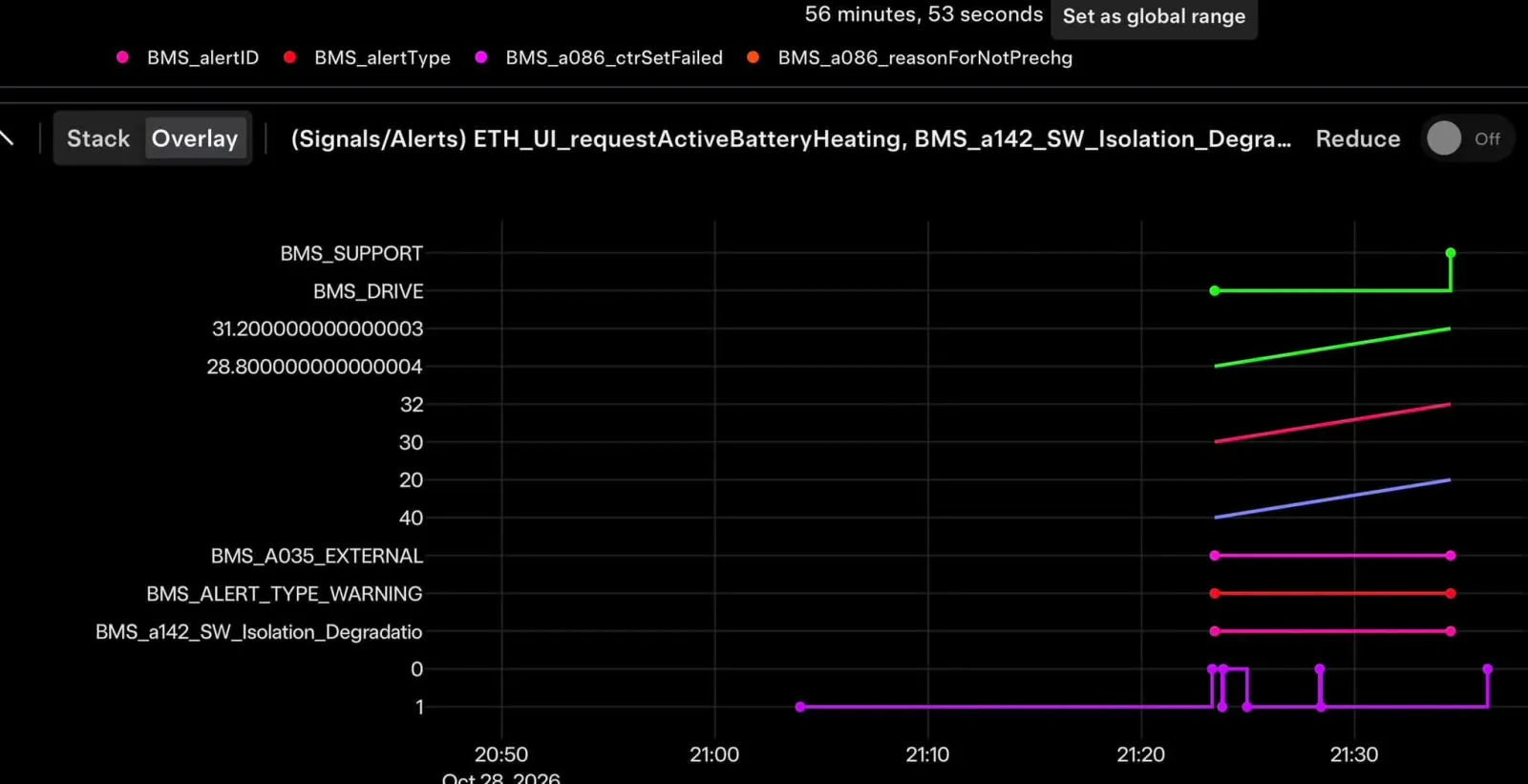
Those logs told a different story from the dashboard. The driver was only warned at the Supercharger, yet the car had logged isolation degradation earlier, out on the road. So the contactor alerts looked like a side effect of the isolation fault rather than the root of it.
Why the battery heater became a suspect
About 25 minutes before the charging stop, the battery heater had started working. The isolation fault first showed up in that same stretch of driving, which put the heater high on our list.
Yet it passed Tesla's thermal system test. During the test it heated as it should, and we could not make the fault happen again. So the answer had to be in the data the car had already saved.
In the battery management system (BMS) data, the isolation alert appeared in drive mode and in support mode. Set side by side with the heater's activity, it showed the heater turning off soon after the alert, then switching on and off a number of times. With that pattern in hand, it was worth taking the heater out and testing it by itself.
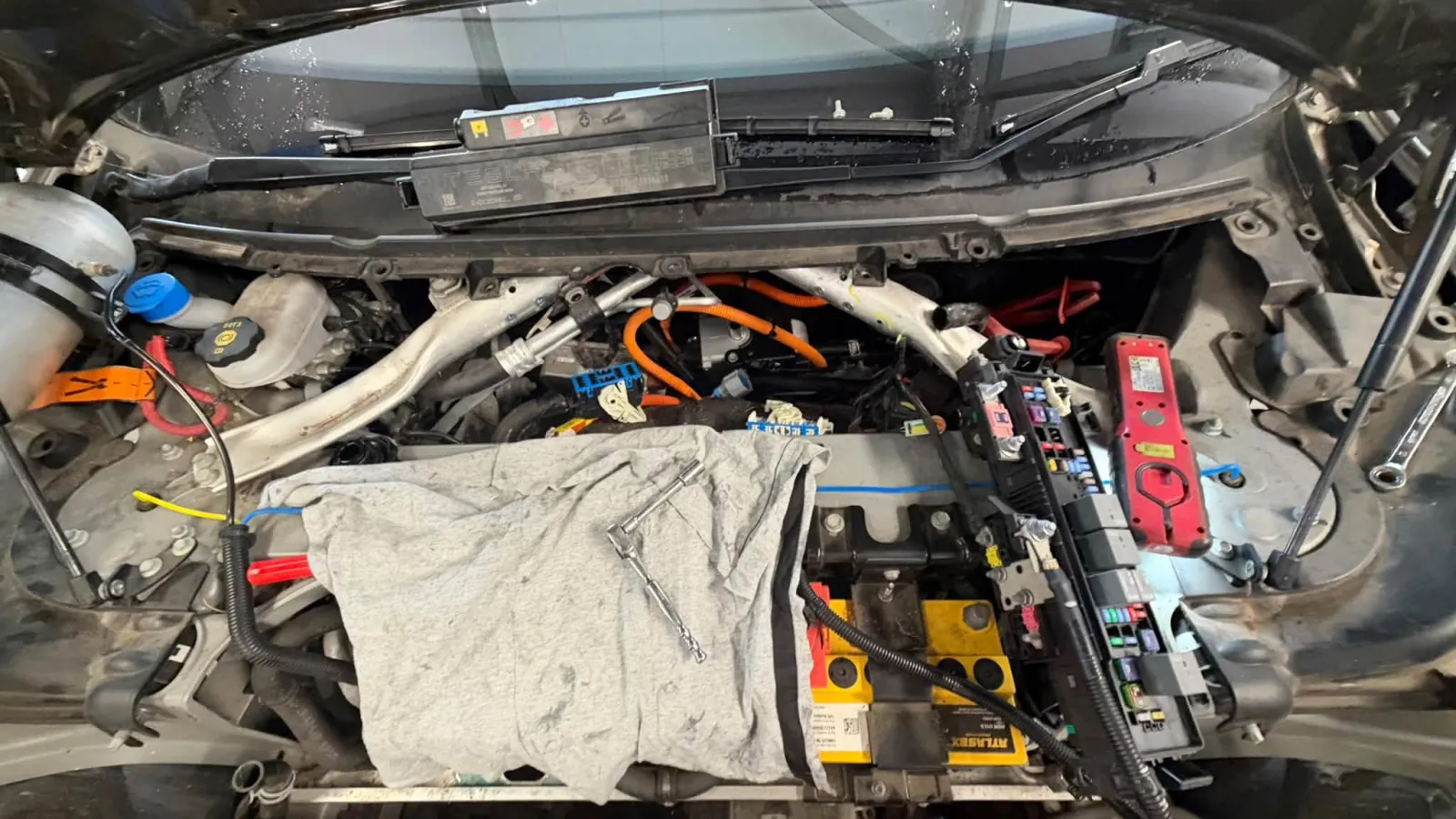
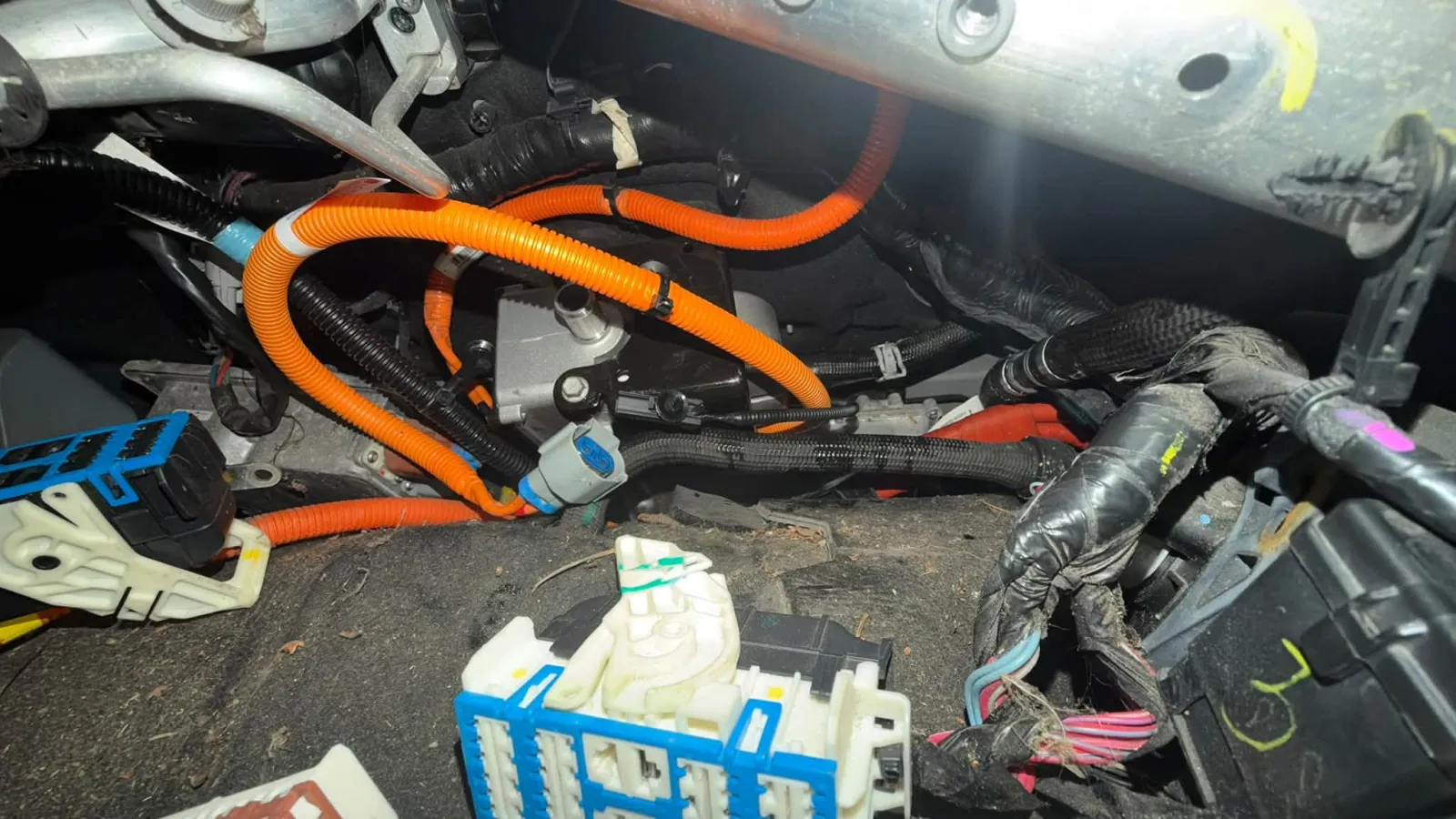
The insulation test found it
Measured on its own with an insulation tester, the heater read only 33.7 MΩ. A healthy one should read well over 500 MΩ in this test. That was the fault.
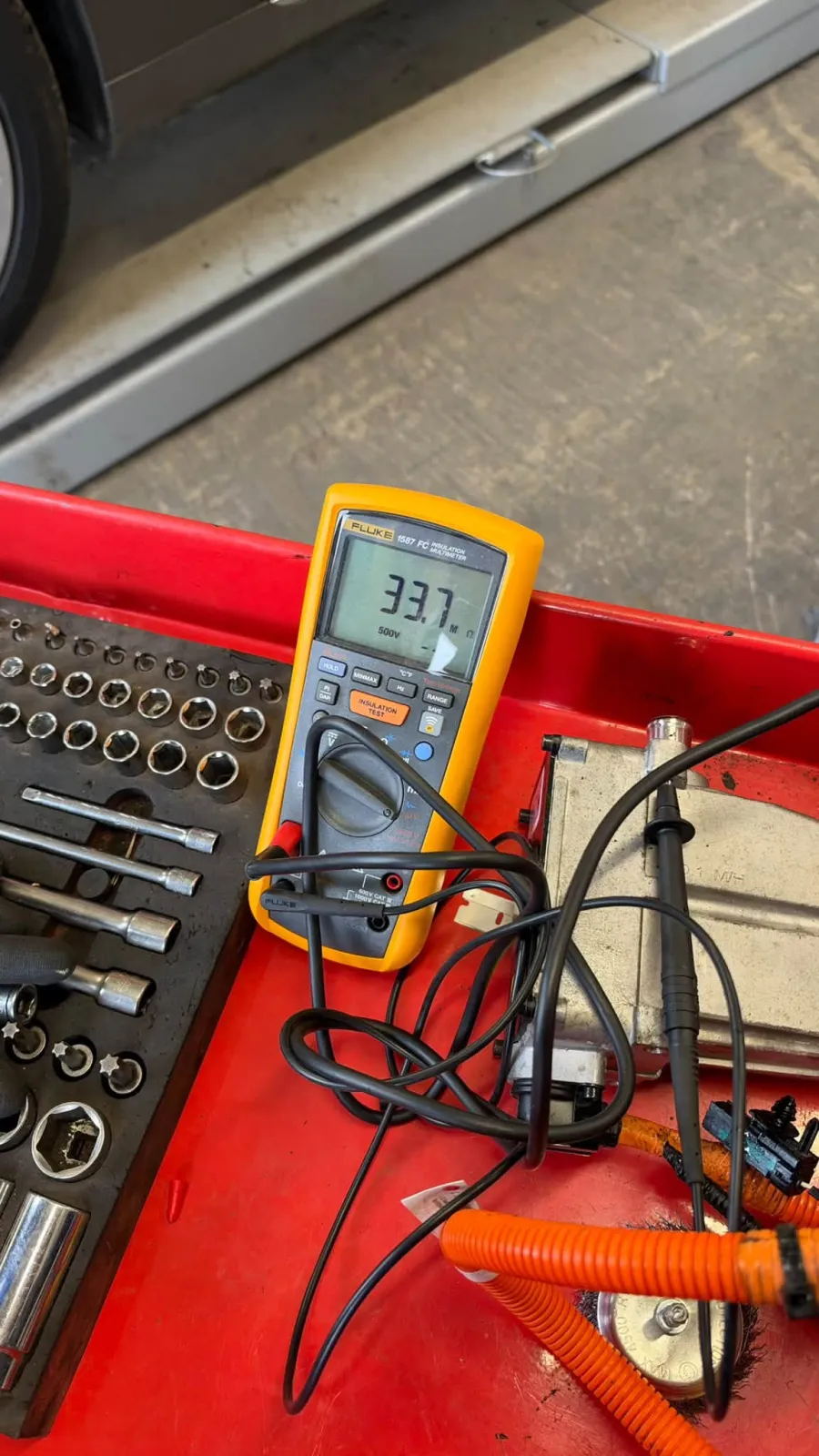
A new battery heater went in and the car is driving again, with its original fast-charge contactors still in place.
Why we spend time on diagnosis
Swapping parts from the alert list, or stopping at a passed thermal test, would have left this car with the same fault. The heater behaved perfectly on test. It was the trip logs and the insulation tester that caught it, and the key was working out when the fault first appeared.
If your Tesla has shown "Vehicle may not restart" or an isolation warning, send us a message with the model, the year and when it happened. Our battery repair page explains how we diagnose high-voltage faults before replacing anything.
Related service