

A complicated Tesla Model S coolant delete: solving seized high-voltage cables
A 2017 rear-wheel-drive Model S had coolant in its large drive unit. The coolant delete turned complicated when the motor's high-voltage cables were seized. Here is how we found the room to work and saved the drive unit.
personBy Gabor, MegaEV calendar_today 2 min read
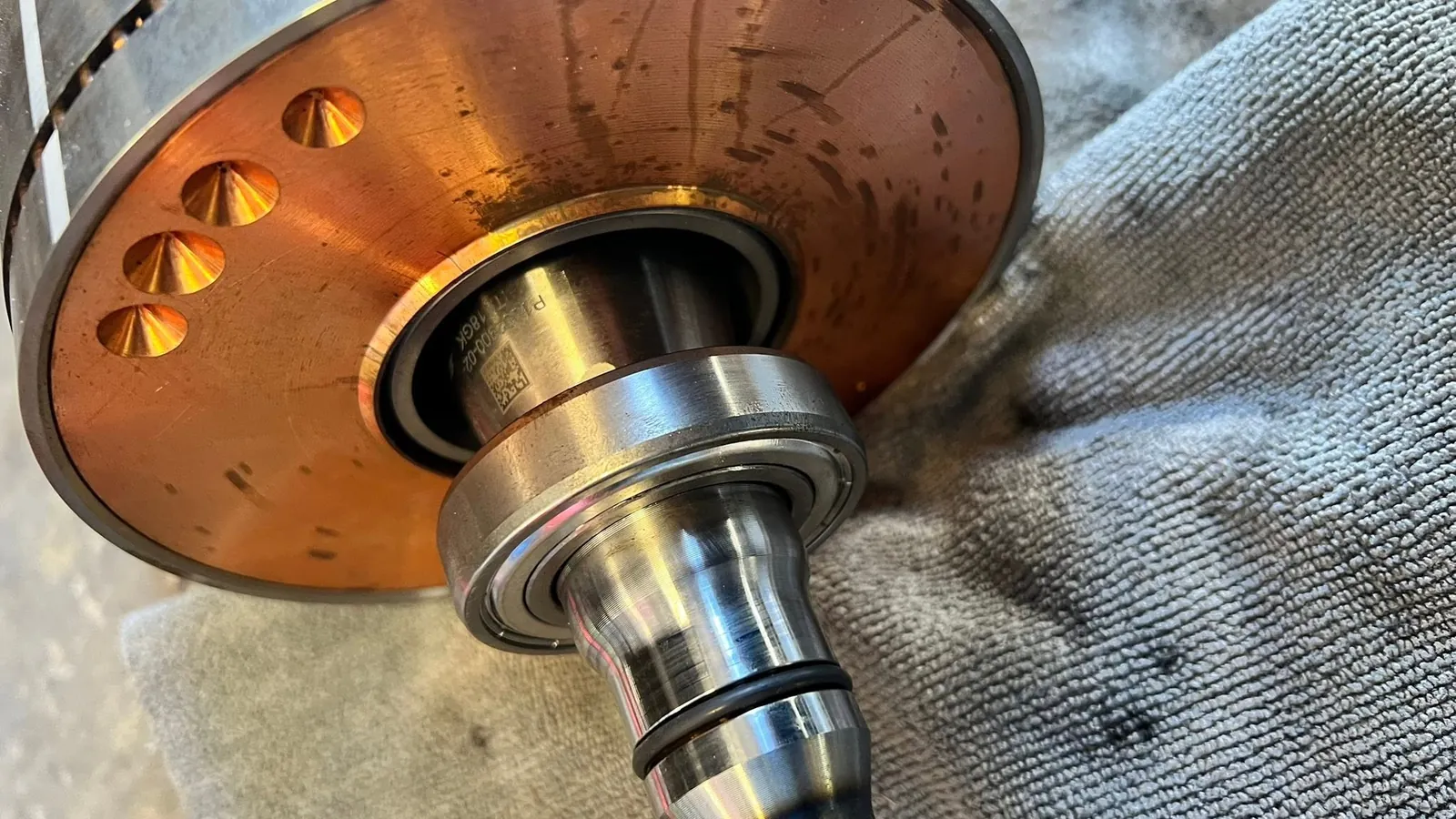
This 2017 Model S came in for a health check. As a rear-wheel-drive car, it uses Tesla's large drive unit (LDU), so we checked the drive unit's speed sensor for coolant ingress. We found it, and booked the car in for a coolant delete.
Why coolant in the LDU matters
On rear-wheel-drive and Performance Model S cars, coolant can find its way into the large drive unit through the speed sensor. Left alone, it can cause the drive unit's isolation to fail, or damage the motor itself. The coolant delete modification removes that route, and the earlier it is done, the less damage there is to repair. We found the same problem recently on a Model S 85 with a coolant leak.
A major issue: seized high-voltage cables
When we started taking things apart, we ran into a major issue: the motor's high-voltage cables were completely seized.
This is a late rear-wheel-drive car with the latest generation of high-voltage harness. On these cars, the motor's high-voltage cables join into the high-voltage rapid mate connector. That limits the space to work in, and unlike on older models, the cables cannot be disconnected from the other end.
So there was not enough space to lift the motor, and no way to disconnect its high-voltage cables from the car.
The solution
We needed a cost-effective way round it. We removed the high-voltage battery and the rapid mate connector. That freed up just enough room, and gave the motor's high-voltage harness enough slack, for us to work on it.
Inside, we confirmed that coolant had reached the drive unit. The work:
- disassembled the motor
- cleaned the stator
- replaced the rotor bearings
- fitted the coolant delete kit
- reassembled the motor and measured its resistance
Another drive unit saved
This Model S is back on the road: problem solved, and another LDU saved before it was too late.
If you have a rear-wheel-drive or Performance Model S and the coolant delete has not been done, it is worth having the speed sensor checked. Send us a message, or see our drive unit maintenance and repairs service.
Related service