

Tesla Model 3 rear drive unit bushings: tracking down a thud from the back
Booked in for a health check, this Model 3 gave itself away within metres with a heavy thud from the back. The culprit was worn rear drive unit bushings: a cheap part, but a big job that means dropping the subframe.
personBy Gabor, MegaEV calendar_today 4 min read
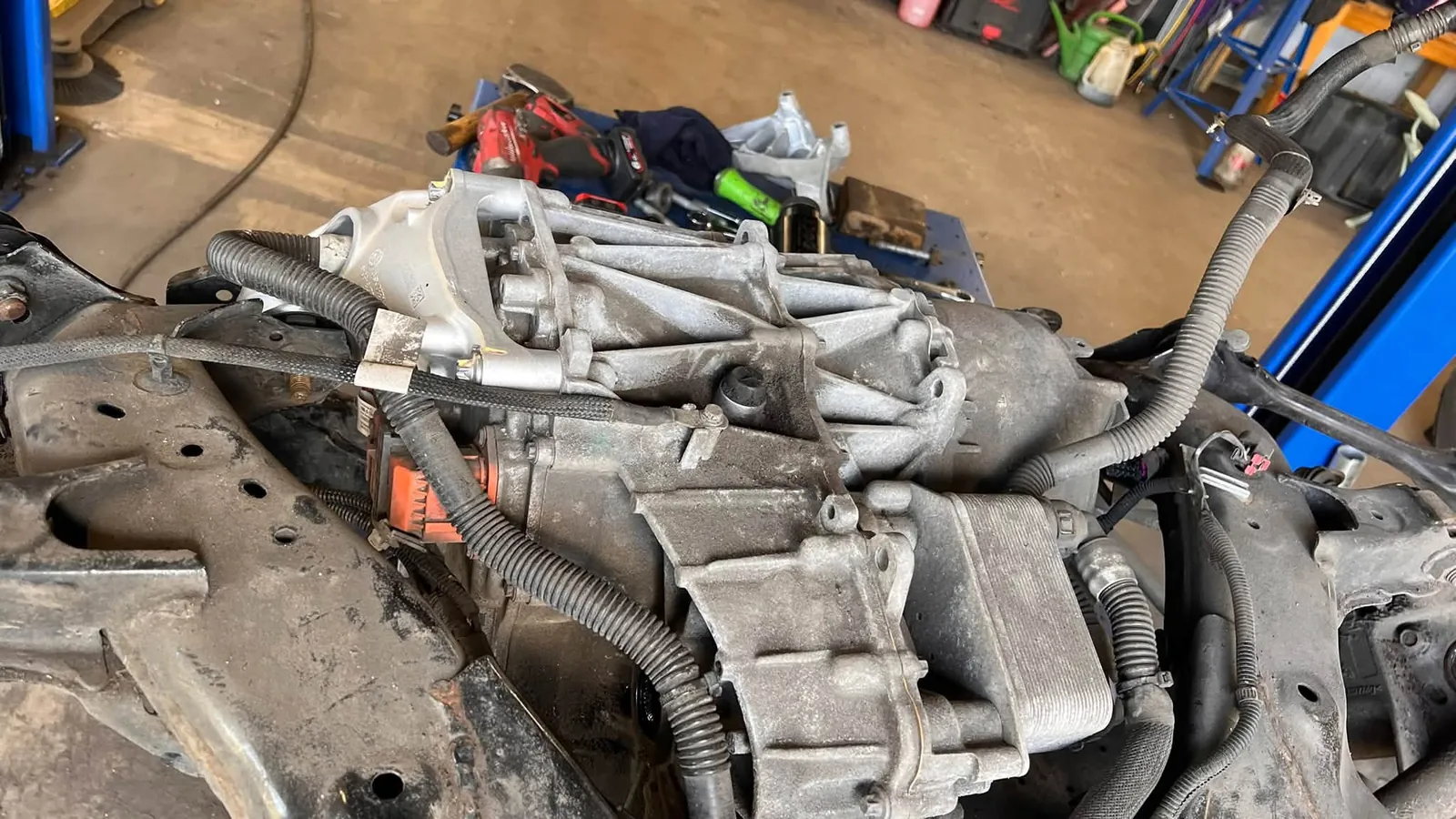
We booked this Model 3 in for a health check, expecting a bit of routine suspension work. It turned out to need rather more than that.
Listening before lifting
Before a car goes up on the lift, we drive it slowly around the workshop. It is a simple step, but it lets us hear noises and sense how the car handles, which is hard to recreate once it is in the air. It is especially useful for tracking down rattles from the air suspension on a Model S or Model X.
On this car, we did not have to listen for long. The moment it pulled away, a heavy thud came from the back.
What was causing the thud
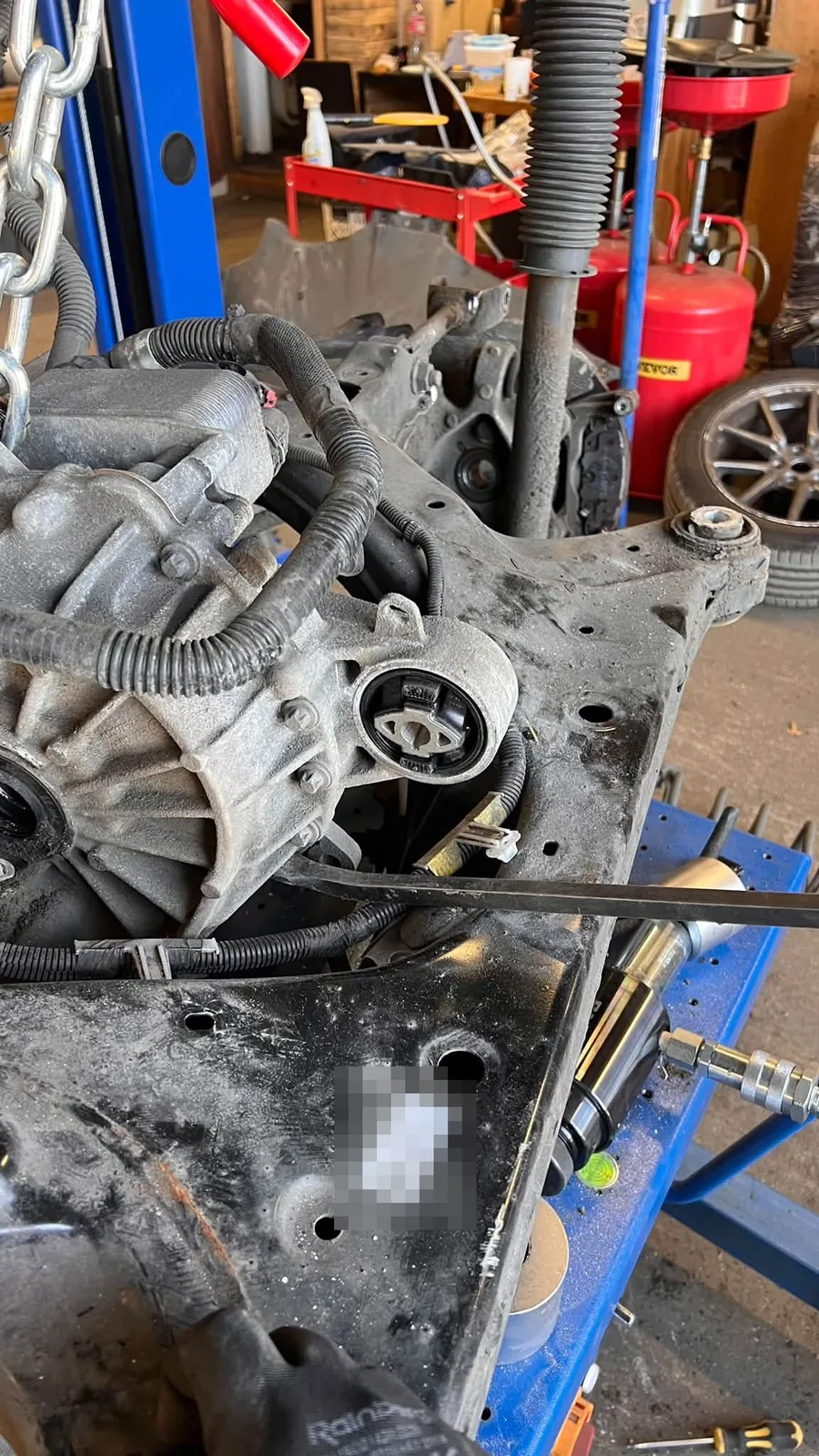
The rear drive unit sits in the rear subframe on rubber bushings. As the miles build up on a Model 3, that rubber can split and break up. Once that happens, the drive unit is no longer held firmly, and it moves more than it should when the car accelerates. That movement is the thud you hear.
The noise is the obvious symptom, but it is not the only concern. A drive unit that moves around also pulls on everything attached to it, including the wiring and the coolant hoses, which are not designed to take that extra strain.
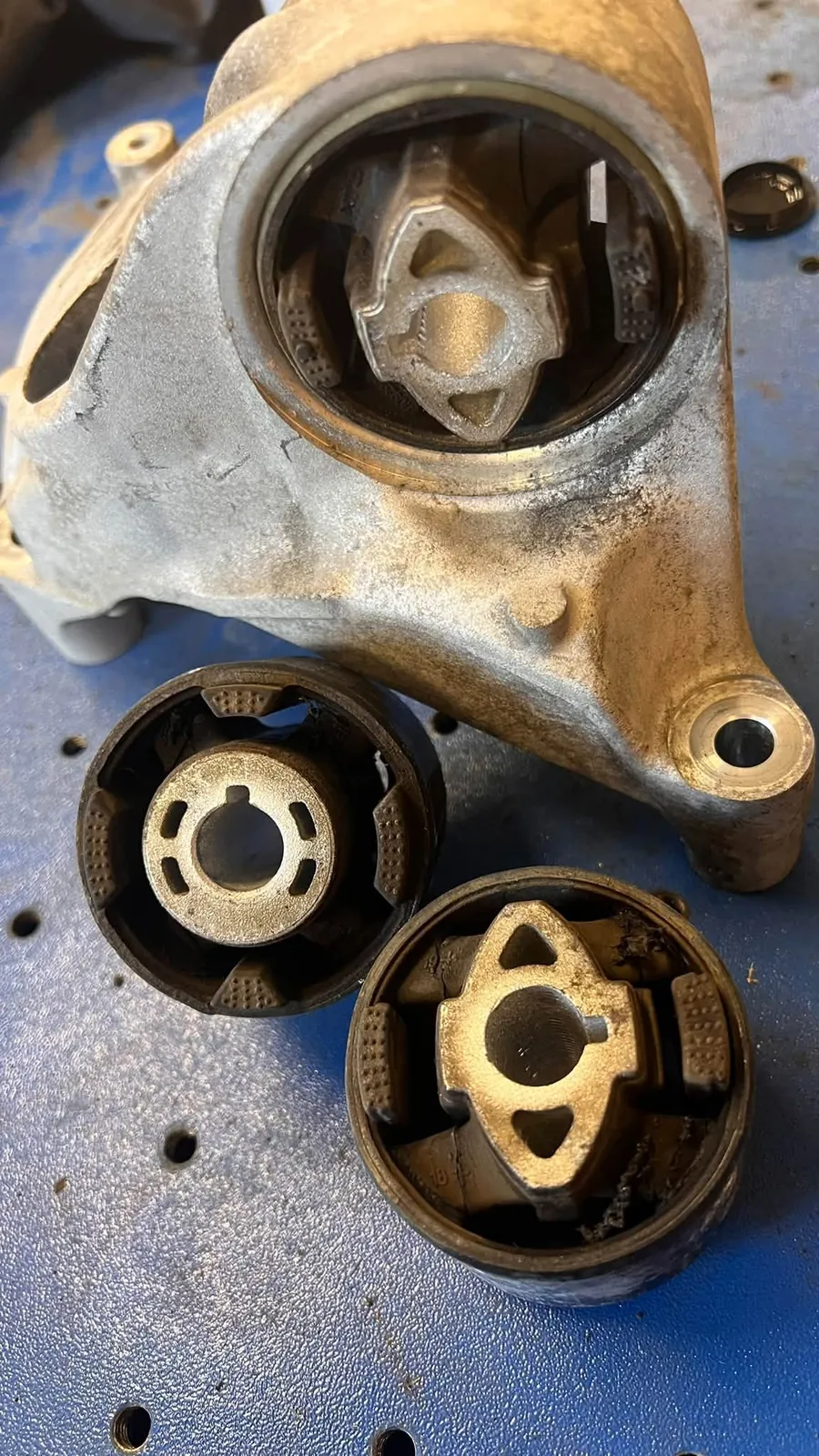
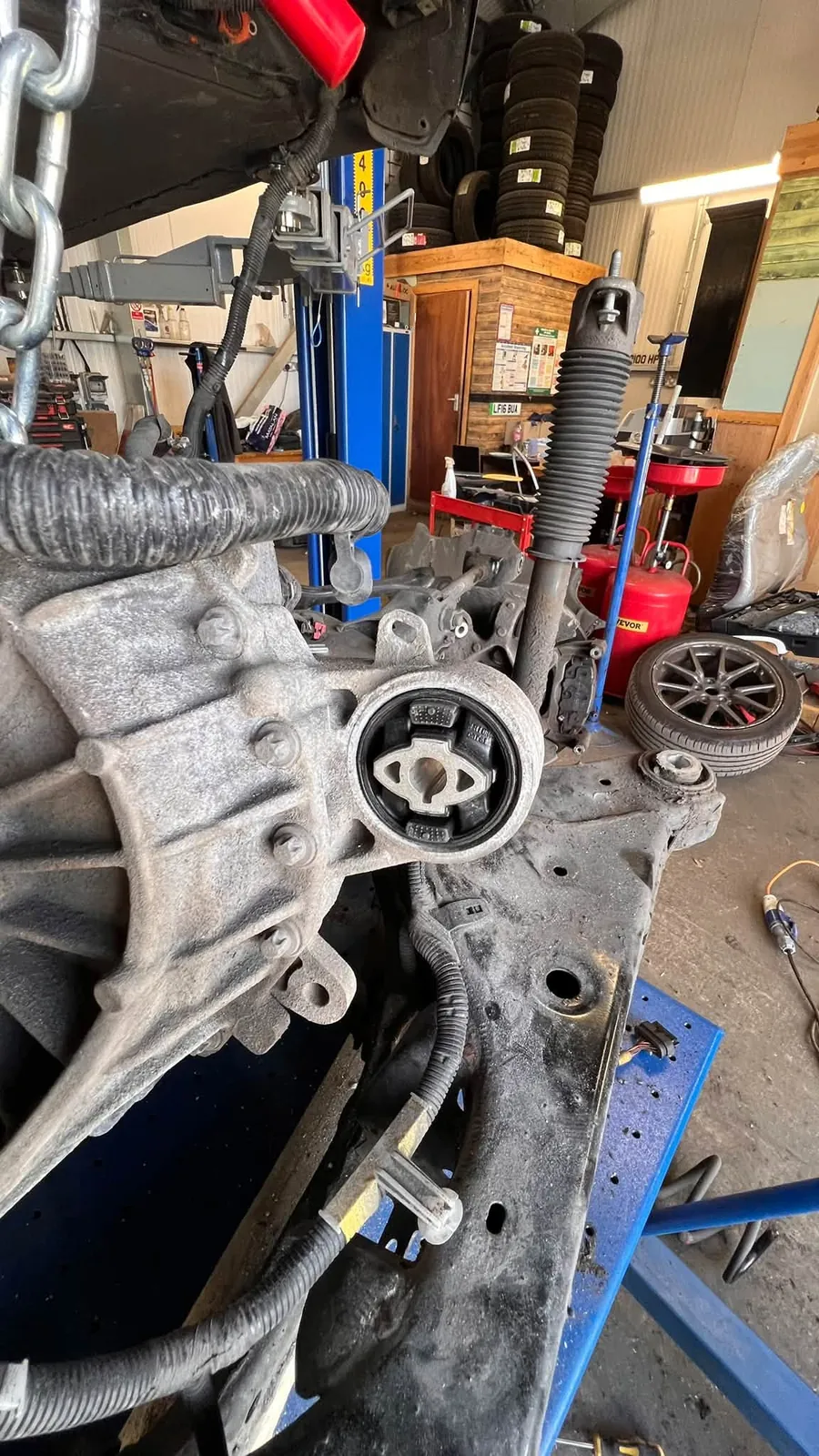
If your Model 3 thuds or clunks from the rear as you pull away or come off the accelerator, it is worth having the drive unit mounts checked.
A cheap part, a big job
The bushings themselves are not expensive. Getting to them is where the work is. For this repair we:
- made the high-voltage system safe to work on
- unplugged the coolant hoses from the drive unit
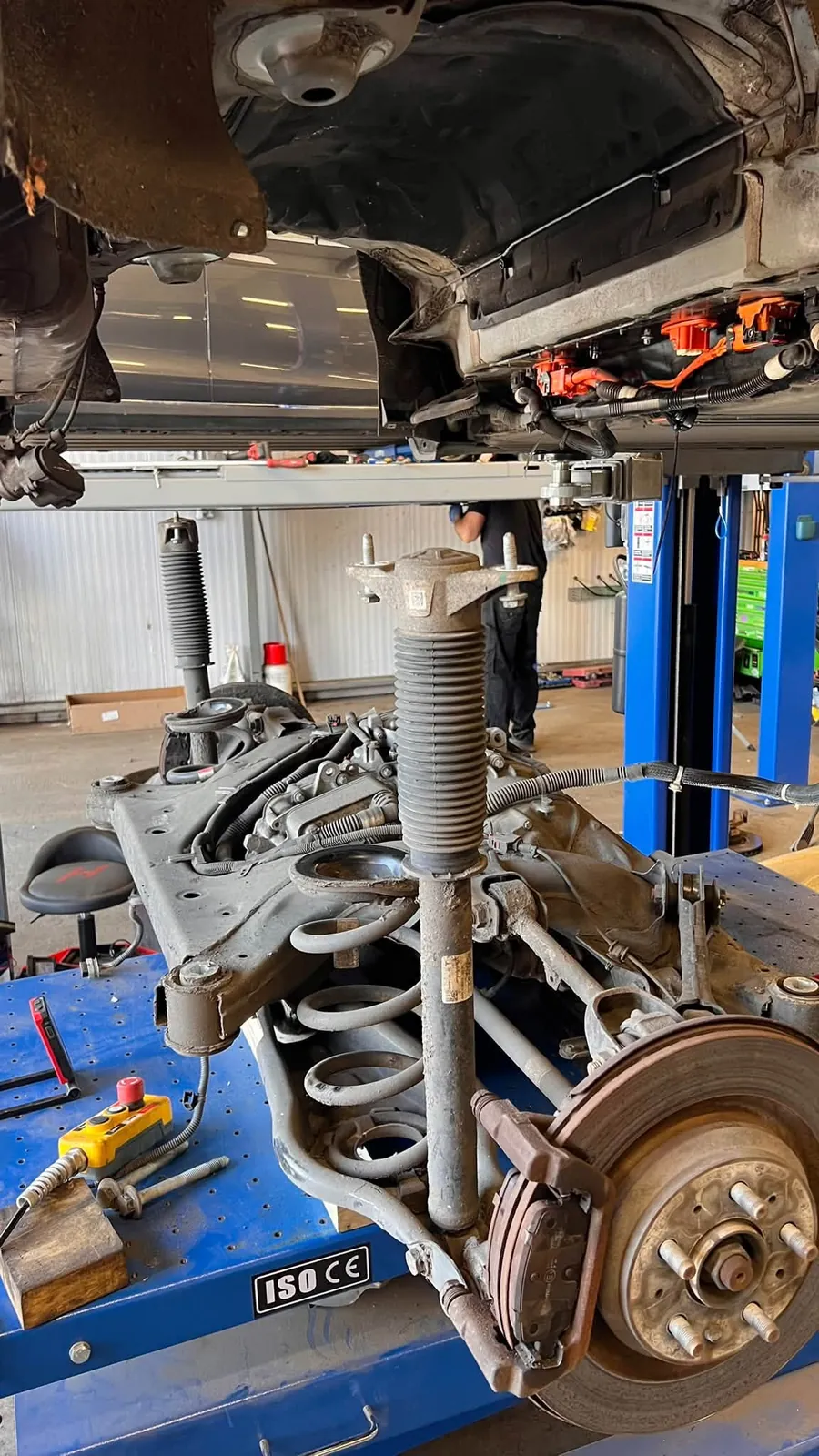
- lowered the whole rear subframe out of the car
- lifted the drive unit out of the subframe
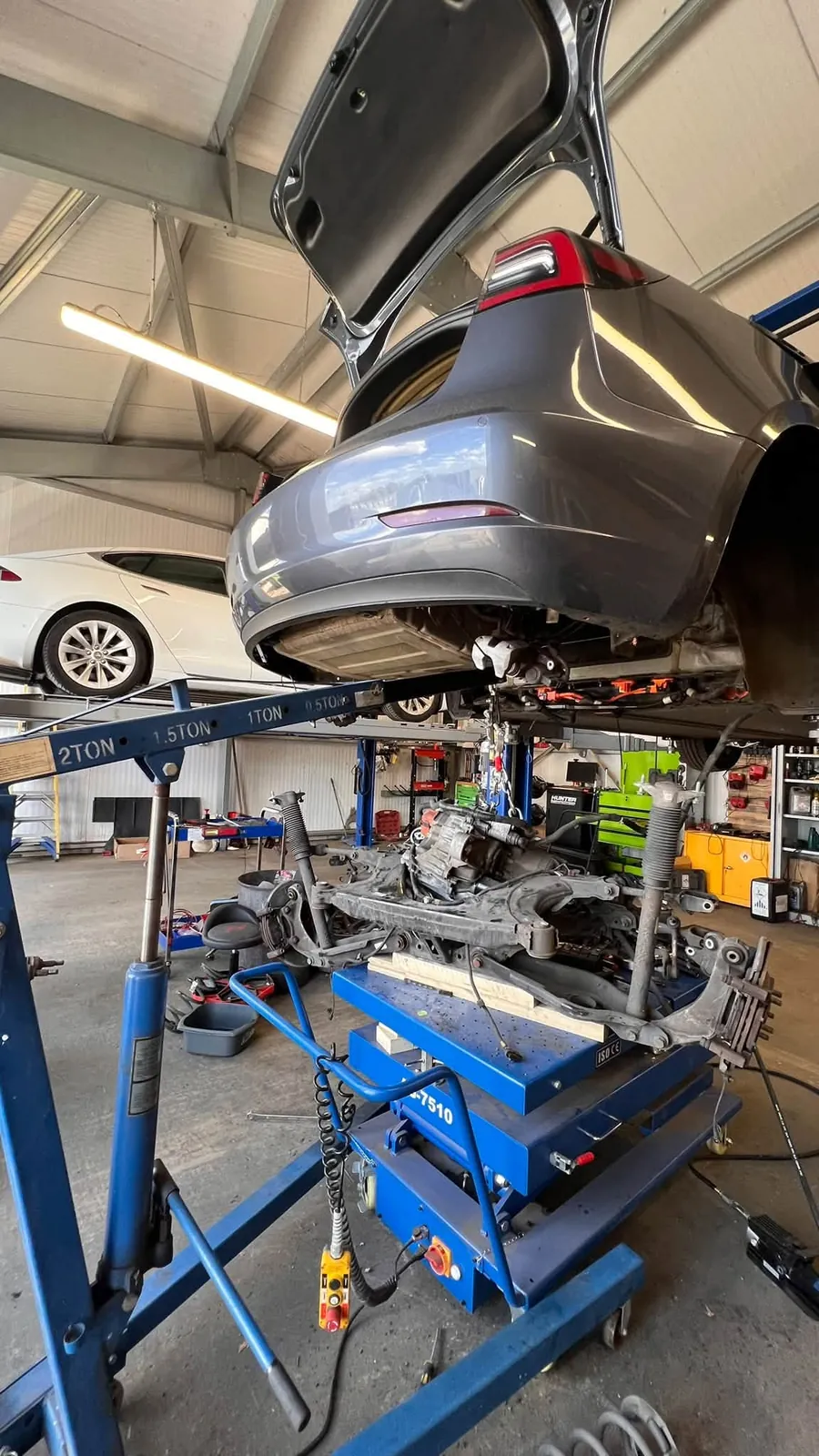
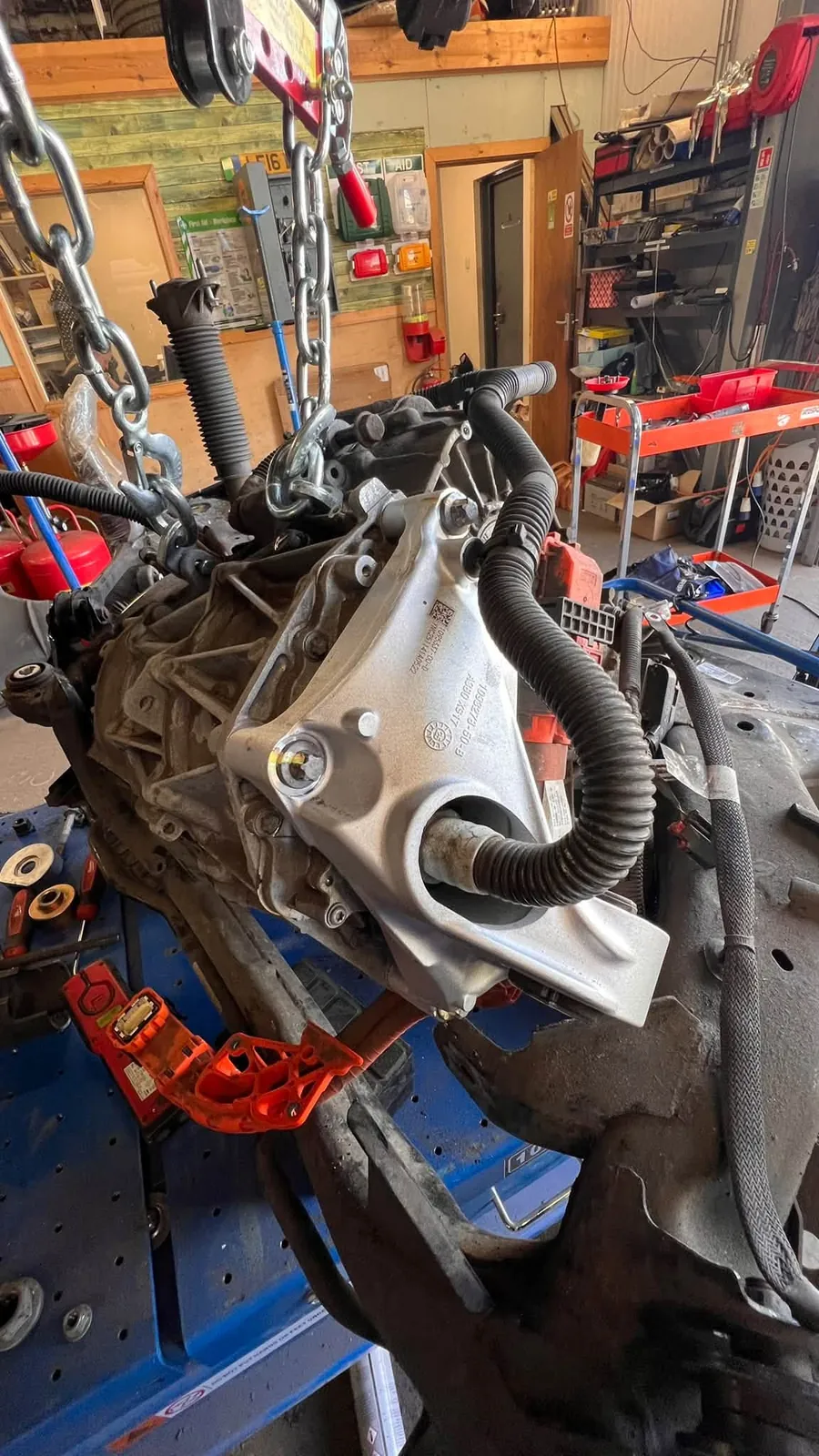
Even then, a generic bushing press kit was not up to the job. The bushing on the driver's side has hardly any room around it, and all of them are pressed in very tightly, so having the proper tools for this exact job makes a big difference.
Putting it back together
With the new bushings in, we refitted the drive unit and the subframe, reconnected everything, and completed the thermal system test that is required after the coolant circuit has been opened. The thud has gone, because the drive unit is held firmly in the subframe again.
Alignment after a subframe removal
Taking the subframe out always affects the suspension geometry, so a wheel alignment is a must afterwards. We set it on our own Hunter HawkEye Elite alignment system, and the car went home quiet and driving straight.
Hearing a noise from your Tesla?
If your Tesla makes a new thud, clunk or knock, send us a message with the model, the year and when you hear it. Our drive unit and brakes and suspension pages explain how we diagnose noises like this before replacing anything.