

Tesla Model S P100D AC and thermal system overhaul: why a regas is never the whole answer
A P100D came in with radiator shutter alerts and weak air conditioning, despite a recent regas. A high-pressure nitrogen test found leaks a vacuum test had missed. Here is the full overhaul, and why we now test every AC system under pressure.
personBy Gabor, MegaEV calendar_today 4 min read
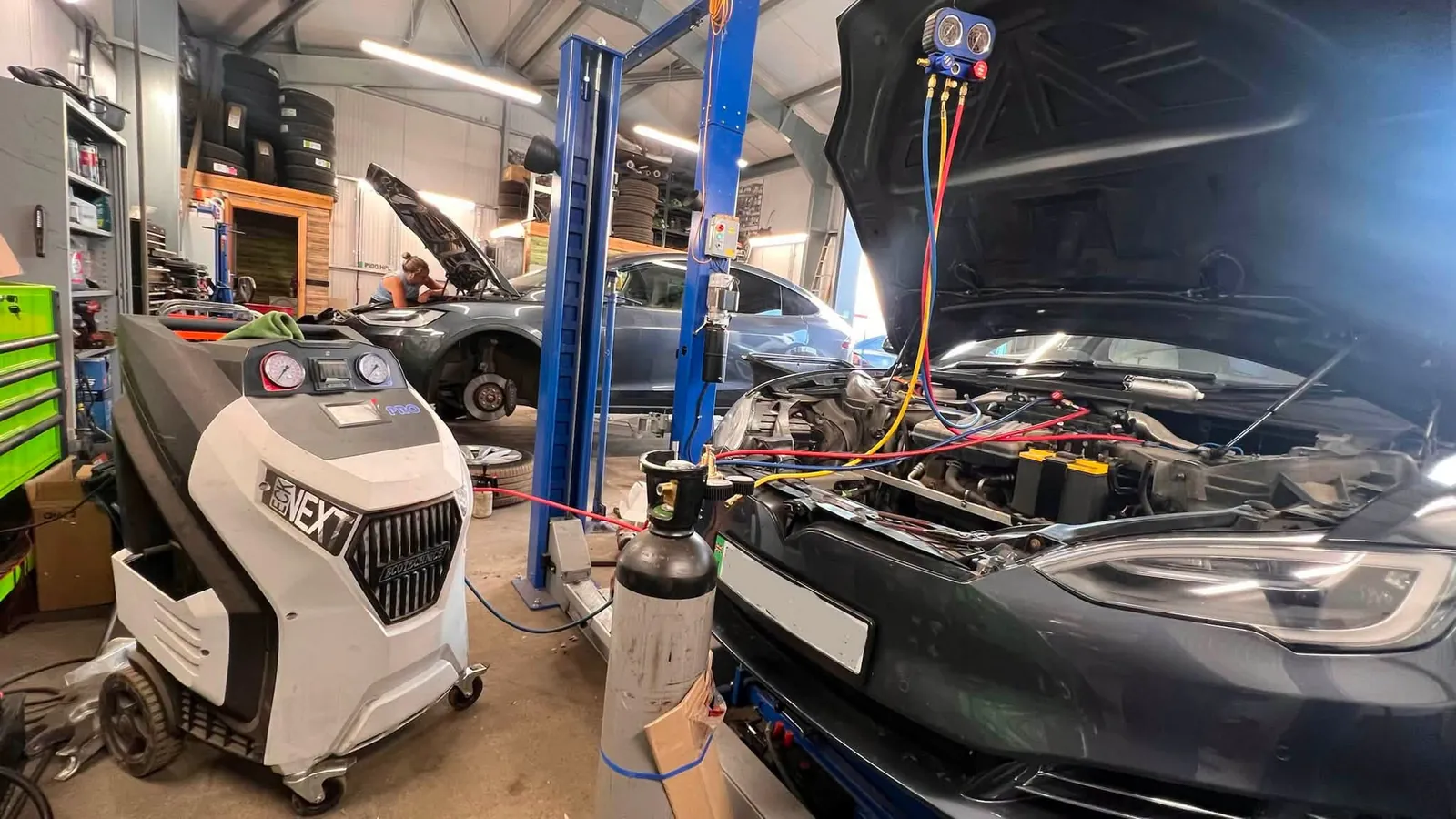
This P100D came to us with several thermal system issues. Radiator shutter alerts were showing, and the air conditioning performance had noticeably dropped.
It is never just a regas
We have carried out around 80 AC system repairs this year alone, so we knew this was not going to be just an AC regas. It never is.
Refrigerant is not used up. It circulates around a sealed system. If the refrigerant level is low, it has escaped somewhere, and topping it up does not fix that.
What we found
Checking the condensers, we found that the coolant radiator was in very poor condition and looked close to developing a leak, so we discussed replacing it with the customer.
A visual inspection also confirmed several leaks in the AC system, with both condensers showing signs of leakage.
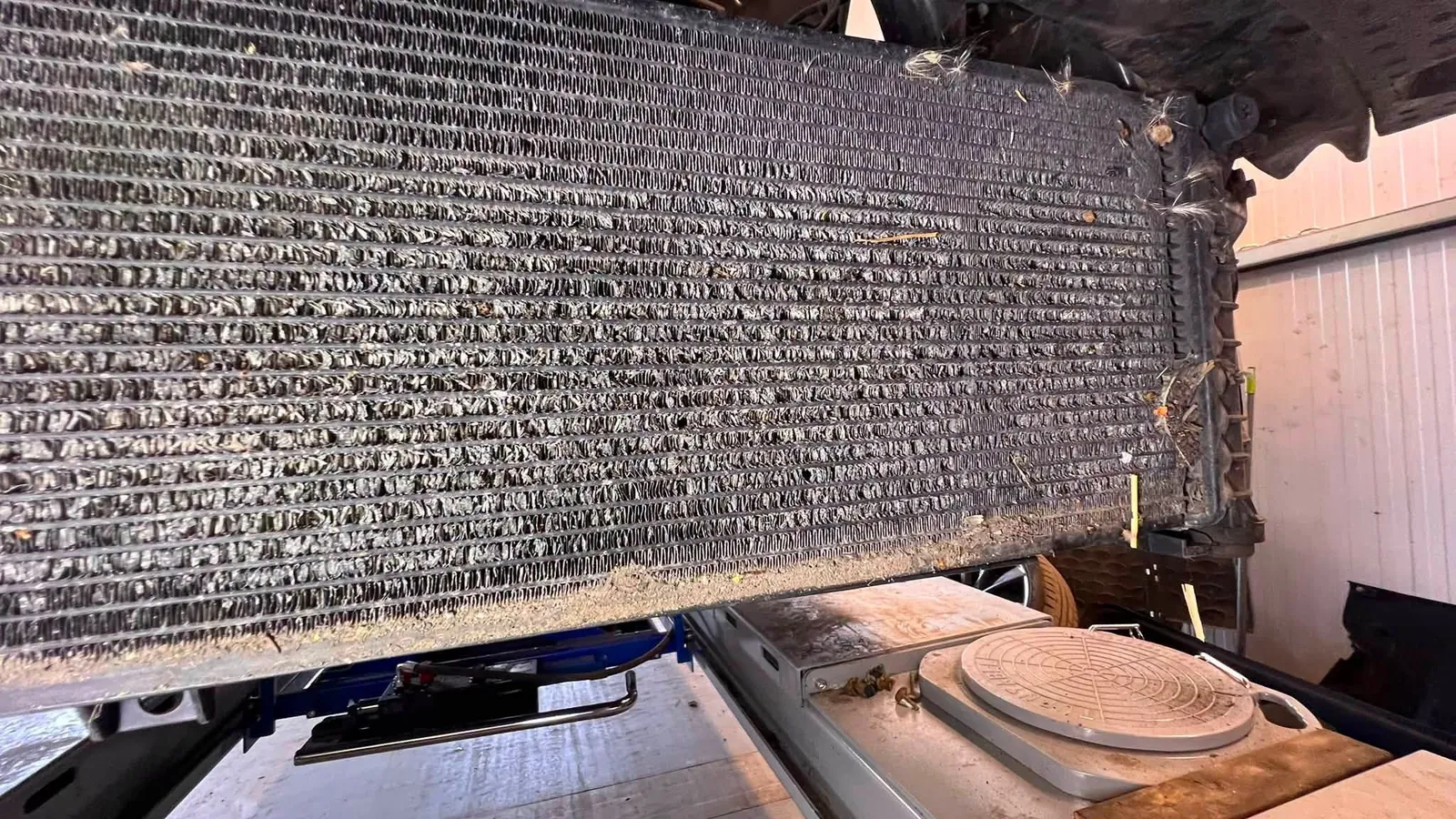
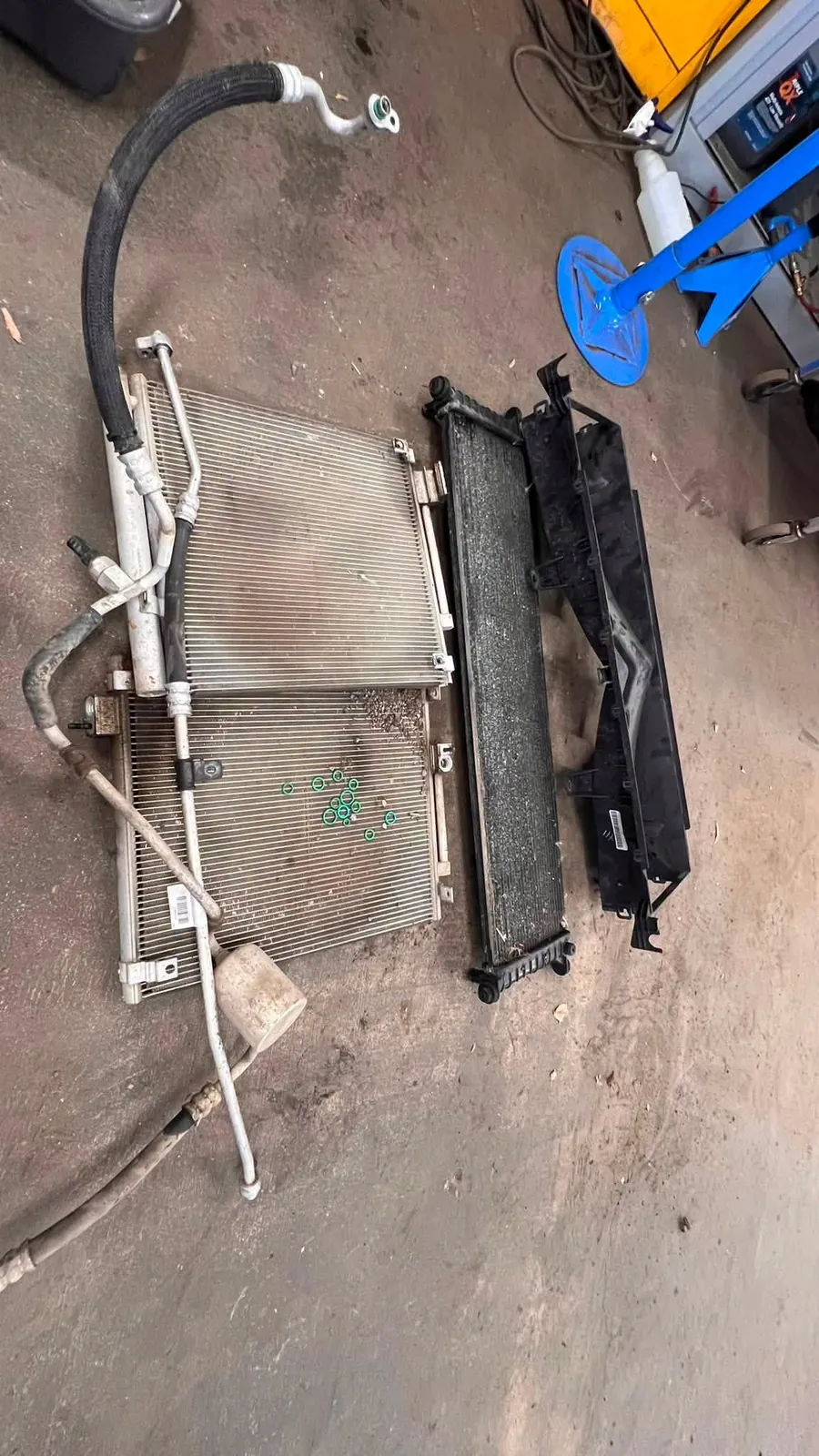
Interestingly, the car had been regassed fairly recently.
A pattern we have seen all summer
This fits a pattern we have seen again and again this summer:
- the AC stops performing properly
- the car goes in for a regas
- the system passes a vacuum test
- it is recharged and declared leak-free
Then, a few days, weeks or months later, the AC performance starts dropping again.
The problem is that a vacuum test can easily give a false sense of security. A system that holds under vacuum can still leak once it is at operating pressure.
Where the leaks hide
Condensers are often the first suspect on a Model S or Model X, particularly after years of corrosion and road debris. But they are definitely not the only possible leak point. We regularly find leaks around seals and pipe joints, and occasionally around pipe compression fittings or the AC compressor itself.
So when a car comes in with unexplained refrigerant loss or poor AC performance, we now carry out a full high-pressure nitrogen test on our purpose-built test rig. It tests the system under positive pressure, and finds small leaks that can otherwise be extremely hard to identify.
We have also put together a complete AC seal kit using genuine Tesla seals. While the system is apart, we can replace the ageing seals throughout it, instead of fixing one leak and leaving another one behind.
This P100D shows why
Alongside the leaking condensers, the pressure test found more seal leaks, and a corroded, cracked crimped fitting on one of the high-pressure AC pipes. The leak from that fitting was extremely small. It only showed up once the pressure approached about 20 bar.
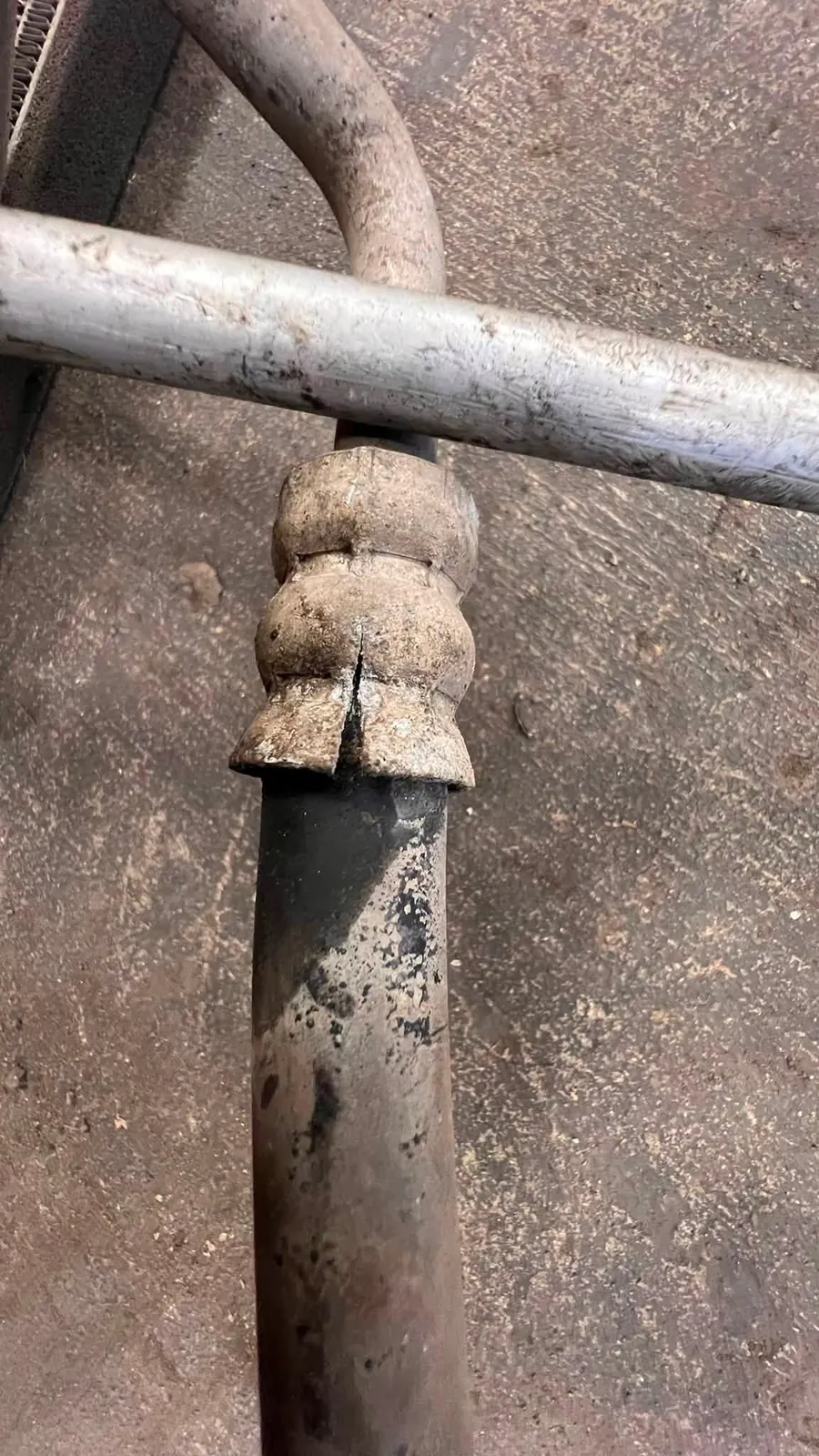
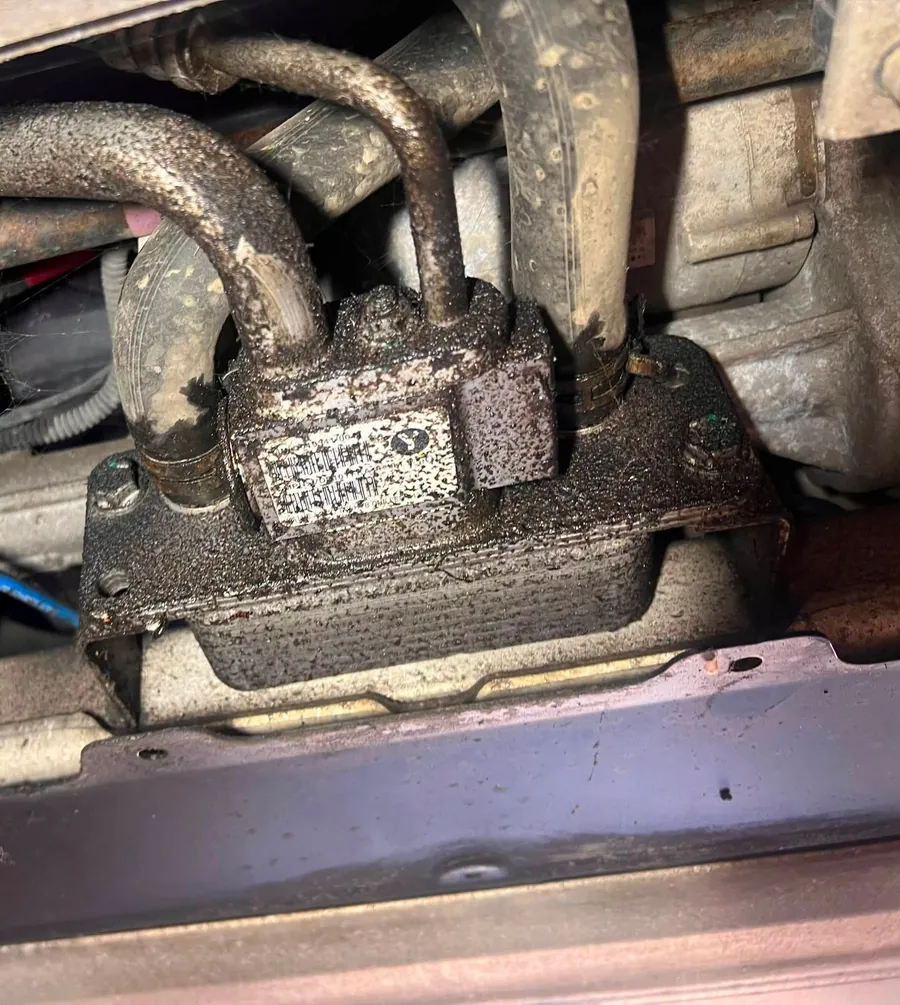
The chiller also had a leaking sealing ring, which we replaced as part of the overhaul.
The overhaul
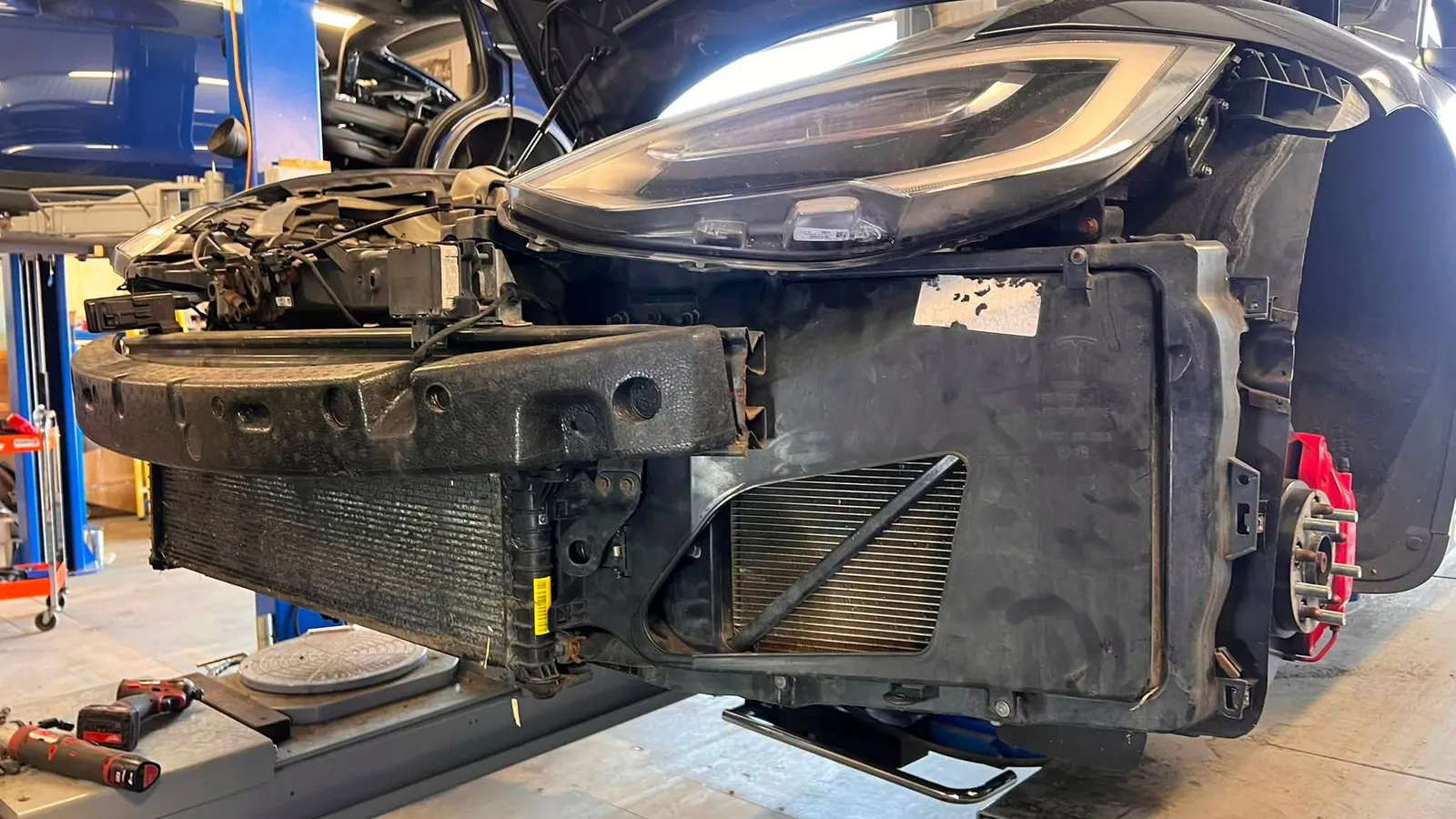
- stripped the front end
- replaced the deteriorated radiator and both condensers
- replaced the chiller's leaking sealing ring
- renewed all the AC seals
- pressure tested the system again
- evacuated the system and recharged it correctly
- calibrated the radiator shutter through Tesla Toolbox after reassembly
A considerably bigger job than an AC regas, but the result is a properly repaired, pressure-tested and fully working thermal system.
Keep the radiator and condensers in mind
Corrosion and road debris are hard on the radiator and condensers at the front of the car. For more on why thermal management matters, see our Model 3 heat pump repair, where a radiator half blocked with leaves added to the load on the system, and our Model X thermal system repair, where a nitrogen pressure test found a corroded AC pipe.
If your Tesla's air conditioning keeps losing performance, even after a regas, send us a message. Our air conditioning and thermal management service explains more.
Related service